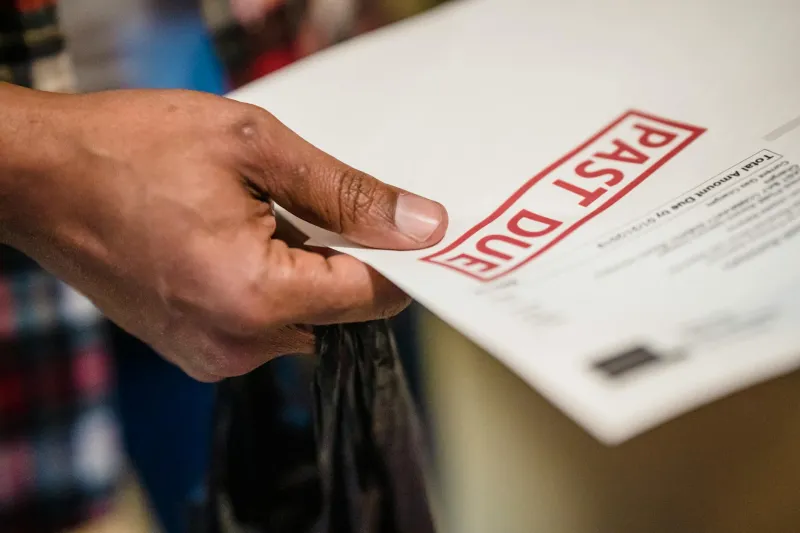
In Ferguson, Missouri, a 32-year-old mother of three sits in jail not because she committed a violent crime, but because she couldn't afford to pay a $151 traffic ticket that ballooned into over $1,000 in fees and fines. Her story isn't unique—it's the predictable outcome of a system that has quietly resurrected debtors' prisons across America, despite the Supreme Court's supposed ban on the practice nearly four decades ago.
 Photo: Supreme Court, via www.courts.ri.gov
 Photo: Ferguson, Missouri, via cdn.theatlantic.com
The Return of What We Thought We'd Abolished
The Supreme Court ruled in Bearden v. Georgia (1983) that jailing people simply for being too poor to pay fines violates the Equal Protection and Due Process clauses of the Constitution. Yet today, according to the Brennan Center for Justice, people are regularly incarcerated for unpaid court debt in 44 states. The American Civil Liberties Union documented over 7,000 arrest warrants issued in a single year in just one Louisiana parish for unpaid fines and fees—most for traffic violations.
This isn't an accident or an oversight. It's a deliberate policy choice that transforms municipal courts from institutions of justice into revenue-generating machines that prey on the poor.
The Debt Trap by Design
The modern debtors' prison operates through a carefully constructed legal maze that makes poverty progressively more expensive. Here's how it works: A person receives a traffic ticket they can't afford to pay. The court adds "failure to appear" fees when they miss their court date (often because they couldn't take time off work or lacked transportation). Late fees compound monthly. Their driver's license gets suspended, making it illegal for them to drive to work to earn money to pay the fine.
When they inevitably drive anyway—because in America, losing your license often means losing your livelihood—they're arrested for driving with a suspended license, triggering new fines and fees. The Lawyers' Committee for Civil Rights found that in Louisiana, a single unpaid $100 traffic ticket can spiral into over $3,000 in total penalties within just six months.
Who Pays the Price
This system doesn't affect all Americans equally. Data from the Brennan Center shows that jurisdictions with higher poverty rates and larger Black populations are significantly more likely to rely on fines and fees for revenue. In Ferguson, before the Department of Justice intervention following Michael Brown's killing, court fines and fees generated 23% of the city's revenue—the second-largest source of income after taxes.
The demographics tell the story: While Black residents made up 67% of Ferguson's population, they comprised 85% of traffic stops, 90% of citations, and 93% of arrests. The average household owed $1,500 in court debt. This isn't coincidence—it's structural racism disguised as colorblind municipal finance.
The Revenue Addiction Problem
Critics argue that courts must fund themselves somehow, and that people should simply pay their fines. But this misses the fundamental perversion of justice that occurs when courts become profit centers. The National Center for State Courts found that jurisdictions heavily dependent on fine revenue issue significantly more citations per capita and impose harsher penalties for identical offenses.
When a town's budget depends on extracting money from its poorest residents, every interaction with law enforcement becomes a potential revenue opportunity. Police departments set citation quotas. Judges face pressure to maximize collections. Due process protections erode as courts prioritize payment over justice.
The counterargument that people should "just pay their tickets" ignores economic reality. Federal Reserve data shows that 40% of Americans can't cover a $400 emergency expense. For a minimum-wage worker, a $200 traffic ticket represents 27 hours of work—more than three full days of labor after taxes.
The Human Cost of Institutional Greed
Beyond the immediate injustice of jailing people for poverty, this system creates cascading harms that trap families in cycles of debt and instability. When parents are jailed for unpaid fines, children may enter foster care. When breadwinners lose their licenses, entire households face eviction and food insecurity. The Fines and Fees Justice Center documented cases where people lost jobs, homes, and custody of their children over unpaid municipal debt that started with minor traffic violations.
The psychological toll is equally devastating. People describe living in constant fear of police encounters, avoiding necessary trips, and sacrificing basic needs to make payments on ever-growing court debt. This isn't justice—it's systematic torture of the poor.
A System That Serves No One
The broader implications extend beyond individual suffering to undermine the entire criminal justice system's legitimacy. When courts function as debt collectors rather than arbiters of justice, public trust erodes. Police-community relations deteriorate. The rule of law becomes a mockery when it applies differently based on wealth.
Moreover, this system is economically counterproductive. Jailing people for unpaid fines costs taxpayers far more than the revenue generated—typically $50-100 per day in incarceration costs to collect debts averaging a few hundred dollars. It's fiscal insanity disguised as tough enforcement.
Several states have begun reforms: eliminating driver's license suspensions for unpaid fines, offering community service alternatives, and prohibiting municipalities from budgeting court revenue above certain percentages. But comprehensive federal action remains elusive.
Time for Constitutional Clarity
The resurrection of debtors' prisons represents a fundamental assault on the principle that justice should be blind to wealth. When courts jail people not for what they've done but for what they can't afford to pay, we've abandoned any pretense of equal justice under law.
America abolished debtors' prisons once before because we recognized them as fundamentally incompatible with human dignity and democratic values—it's time to finish the job.