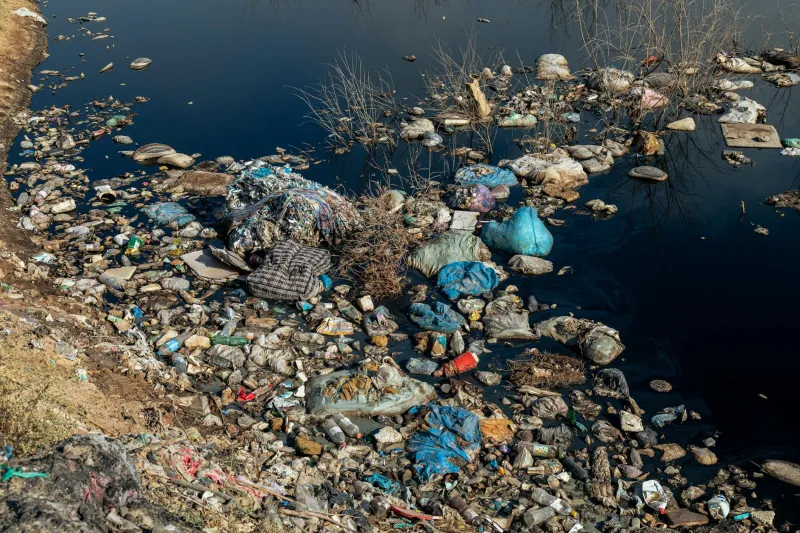
While Americans debate infrastructure spending in Washington, millions of their neighbors are living without access to clean, safe drinking water. In Jackson, Mississippi, a predominantly Black city, residents went without running water for weeks in 2022 after decades of deferred maintenance finally caused the system to collapse. In the colonias along the Texas-Mexico border, Latino families pay premium prices for bottled water because their taps run brown—if they run at all. And nearly a decade after Flint's water crisis made international headlines, the city's children still test positive for elevated lead levels at rates far above the national average.
These aren't isolated tragedies or acts of God. They represent a systematic pattern of environmental racism that has relegated communities of color to second-class citizenship when it comes to basic infrastructure—and the data proves it.
The Numbers Don't Lie: EPA Enforcement Follows a Racial Map
A 2022 analysis by the Environmental Protection Agency's own inspector general found that the agency takes significantly longer to investigate violations in majority-minority communities and imposes lighter penalties when violations are found. In zip codes where people of color comprise more than 50% of the population, EPA enforcement actions took an average of 42% longer to complete and resulted in fines 76% lower than those imposed in whiter areas.
The American Community Survey data tells an even starker story. Native American households are 19 times more likely than white households to lack complete plumbing. Latino households are 3.5 times more likely. Black households in rural areas face water access challenges at nearly double the rate of their white neighbors. These disparities aren't shrinking—in many regions, they're growing.
Consider the numbers from Jackson, Mississippi, where 82% of residents are Black and the median household income is $38,000. The city's water system has been under federal oversight since 2012 due to repeated violations of the Safe Drinking Water Act. Yet between 2012 and 2022, federal investment in Jackson's water infrastructure totaled just $47 million—less than what many majority-white suburbs receive for routine upgrades.
Infrastructure Promises Meet Political Reality
The Infrastructure Investment and Jobs Act promised $55 billion for water system improvements, with specific provisions targeting disadvantaged communities. Two years later, the delivery has been uneven at best. While affluent suburbs receive grants for system modernization, communities like Jackson struggle with bureaucratic requirements that favor areas with existing technical capacity and matching funds.
The EPA's new Justice40 initiative pledges that 40% of federal environmental investments will flow to disadvantaged communities. But early data shows familiar patterns: applications from majority-white communities are approved at higher rates and receive larger average awards. The reasons are structural—communities with professional grant writers, engineering consultants, and political connections navigate federal bureaucracy more successfully than those without.
Critics argue that federal water standards are already stringent and that local management failures, not systemic racism, explain these disparities. They point to successful water systems in diverse communities and argue that targeted federal spending creates perverse incentives for local negligence.
But this argument ignores the historical context that created these disparities. Redlining didn't just segregate housing—it segregated infrastructure investment. The Federal Housing Administration's neighborhood ratings from the 1930s through 1960s systematically directed water, sewer, and road investments away from areas with significant minority populations. Today's water crises in communities like Flint and Jackson are the direct legacy of those decisions.
Corporate Polluters and the Geography of Harm
Environmental racism isn't just about neglect—it's about active harm. Chemical plants, refineries, and waste facilities are disproportionately located in communities of color, often with devastating health consequences. In Cancer Alley, the 85-mile stretch of Louisiana between New Orleans and Baton Rouge, predominantly Black communities face cancer rates 50% higher than the national average due to petrochemical pollution.
The EPA's own data shows that people of color are 1.5 times more likely to live near commercial hazardous waste facilities. When these facilities violate environmental regulations, enforcement is slower and penalties are lighter than in whiter communities. A 2021 study found that toxic release inventory sites in majority-minority census tracts received 67% lower penalties per violation than those in majority-white areas.
These disparities compound over generations. Children in environmental justice communities face higher rates of asthma, developmental delays, and learning disabilities—health impacts that follow them through life and perpetuate cycles of educational and economic disadvantage.
The Human Cost of Environmental Apartheid
Behind every statistic is a family forced to choose between paying rent and buying clean water. Maria Gonzalez, a resident of the Scenic Drive colonia in Elmendorf, Texas, drives 20 minutes each way to fill jugs with potable water because her well runs contaminated. Her 8-year-old daughter has chronic stomach problems that doctors attribute to periodic exposure to unsafe water during shortages.
In Flint, despite years of federal attention and $600 million in aid, residents like Melissa Mays still don't trust their taps. Mays' three sons all suffered hair loss and skin rashes during the height of the crisis. Blood tests showed elevated lead levels that may affect their cognitive development for life. "They told us the water was safe," Mays said in a recent interview. "How many times can they lie to us before we stop believing?"
These stories multiply across thousands of communities where environmental racism operates below the media radar. The Navajo Nation, where 30% of households lack running water. Uniontown, Alabama, where a coal ash dump was sited in a majority-Black community over residents' objections. Kettleman City, California, where a hazardous waste incinerator operates next to an elementary school in a community that's 95% Latino.
Beyond Crisis: The Path to Environmental Justice
The Biden administration has made environmental justice a stated priority, but meaningful change requires more than good intentions. It demands restructuring how we make decisions about infrastructure investment and environmental protection.
First, environmental enforcement must be standardized and transparent. The EPA should publish real-time data on violation response times and penalty amounts by community demographics. Disparities in enforcement should trigger automatic reviews and corrective action plans.
Second, infrastructure funding formulas must account for historical underinvestment. Communities like Jackson shouldn't compete on equal terms with suburbs that received decades of preferential federal investment. Justice requires acknowledging past harm and prioritizing repair.
Third, environmental permitting decisions must include meaningful community input from affected residents, not just token public comment periods. When corporations propose new facilities, communities should have access to independent health impact assessments and legal representation.
The Broader Stakes of Environmental Equity
Environmental racism isn't a side issue or a distraction from "real" economic concerns—it is an economic issue. Communities without clean water cannot attract businesses, cannot maintain property values, cannot build generational wealth. Environmental degradation and economic exploitation go hand in hand.
As climate change intensifies, these disparities will worsen without intervention. Extreme weather events hit hardest in communities with aging infrastructure and limited resources for adaptation. Rising seas threaten low-lying areas where people of color were historically relegated. Heat waves are deadliest in neighborhoods without tree cover—neighborhoods that were systematically disinvested in for generations.
The choice facing policymakers is stark: continue the status quo of environmental apartheid, or finally deliver on the promise of equal protection under law.
Environmental justice isn't charity—it's democracy in action, and our collective future depends on getting it right.