Five Cities That Voted — and the State Legislators Who Overruled Them: A Field Guide to Preemption
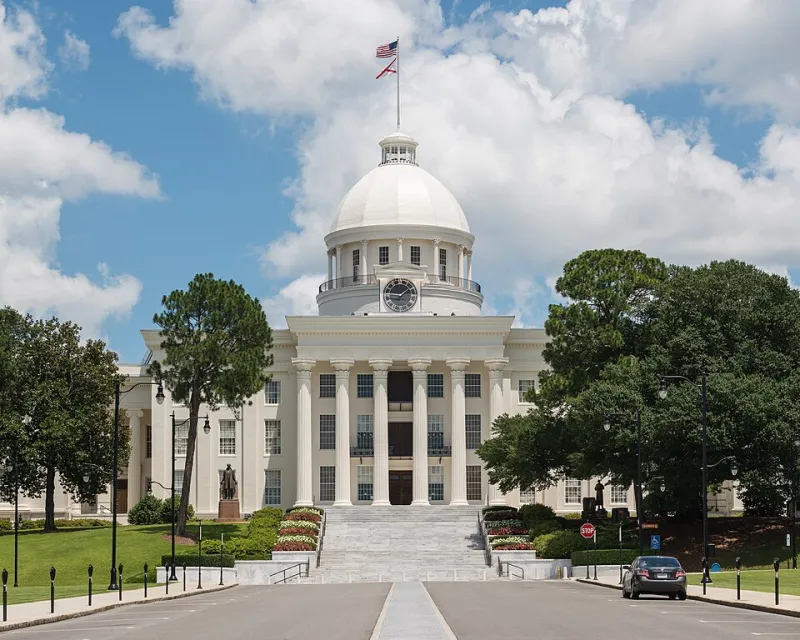
Photo: DXR, CC BY-SA 4.0, via Wikimedia Commons
Democracy, we are told, is local. You know your neighbors; your city council member knows your street. But across the United States, a quiet institutional counter-revolution has been underway for over a decade: state legislatures — often dominated by legislators from rural districts — systematically overriding the ordinances of the cities and counties within them. The mechanism is called preemption, and if you care about the minimum wage, paid sick leave, rent stabilization, or plastic pollution, you should know how it works.
Here are five fights that tell the story.
1. Birmingham, Alabama: The $10.10 That Never Was
In 2015 and 2016, the Birmingham City Council voted to raise the city's minimum wage to $10.10 an hour — a meaningful increase in a state with no wage above the federal $7.25 floor. Within hours of the ordinance taking effect in early 2016, the Alabama legislature passed, and the governor signed, a bill barring any city from setting its own minimum wage. The state move was fast enough that Birmingham's raise was effectively erased before workers could collect it. Alabama's legislature also passed a general preemption law restricting local regulation in a broad range of areas. Roughly a quarter of Birmingham's residents live in poverty — a rate far above the national average — and the workers affected by the repealed raise were overwhelmingly Black, in a city that is roughly seventy percent Black.
2. St. Louis and Kansas City, Missouri: The $10 Vote
In 2015, the St. Louis Board of Aldermen passed a minimum wage increase to $10 an hour, and Kansas City followed with its own ordinance. Both took effect — briefly. In 2017, Missouri's legislature passed a law prohibiting cities from enacting minimum wages above the state level, voiding the local raises. Notably, Missouri voters later passed a statewide minimum wage increase by ballot initiative in 2018, a reminder that when given the chance, even statewide electorates often favor higher wages. But the structure of legislative preemption ensures that local governments — closer to the voters, more responsive, more demographically representative of the workers affected — are barred from acting first.
3. Texas: Paid Sick Leave and the Fracking Ban
Austin, Dallas, and San Antonio all enacted paid sick leave ordinances between 2016 and 2018, covering hundreds of thousands of workers who had none. The Texas legislature preempted the local sick leave laws in 2019. The same session saw preemption of local fracking bans — a direct override of Denton, whose voters had approved a fracking ban by referendum in 2014. Think about that: a city's own voters went to the polls, voted to ban the practice, and the state legislature nullified their vote two years later. Preemption doesn't just override city councils. It overrides ballots.
4. Florida: The Preemption State
Florida has become perhaps the most aggressive preemption state in the country, with laws barring local regulation of everything from vacation rentals to pesticide use to — in 2021 — a requirement that local governments enact no worker protections or business regulations exceeding state standards. Miami-Dade and other local governments have seen environmental, labor, and consumer ordinances swept away under a framework that effectively treats Florida's cities as administrative subdivisions of Tallahassee rather than governments with their own democratic mandates.
5. The Rent Fight in New York and Beyond
Even in blue states, preemption shapes who gets to decide housing policy. New York's rent stabilization regime governed which municipalities could regulate rents until statewide reforms in 2019 expanded local option — a reminder that preemption can be unwound. Meanwhile, states including Tennessee and Georgia have restricted local rent regulation and tenant protections, leaving rapidly growing cities like Nashville and Atlanta unable to respond to the housing pressures their own residents face.
The Pattern — and the Demographics
Look across these five cases and a consistent picture emerges. The cities acting are younger, more diverse, more urban, and more Democratic than the legislatures that override them. The policies being voided — wage floors, sick leave, tenant protections, environmental rules — disproportionately benefit low-wage workers, renters, and communities of color. And the mechanism is structurally undemocratic twice over: first, because state legislative districts are drawn in ways that can dilute urban voting power; second, because a representative from a district hundreds of miles away has no electoral accountability to the city whose law he voids.
Defenders of preemption argue, not without force, that a patchwork of local rules creates chaos for businesses operating across a state, and that states have legitimate interests in uniform commercial law. There is a real point there — no one wants a minimum wage that changes at every municipal boundary. But uniformity cuts both ways, and it is telling that preemption is almost never deployed to raise standards. States that preempt local wage laws are free to raise the state wage themselves; most choose not to. Uniformity, in practice, is a floor held down.
The Counter-Movement
A 'preemption repeal' and 'local democracy' movement is organizing in response — coalitions of labor unions, municipal leagues, and civil rights groups pushing state legislation to restore local authority over wages, housing, and environmental rules, and litigating on home-rule grounds. Some states have passed local-option provisions. The fight is uneven, but it is no longer invisible.
The question underneath all of it is simple: whose vote counts? If a city can vote for its own minimum wage and have that vote erased by legislators its residents did not elect, then 'local democracy' is a slogan, not a system.
If we believe voters should govern themselves, then the power of a statehouse to erase a city's ballot box must be treated as the democratic emergency it is — and the next great progressive organizing front begins exactly there.