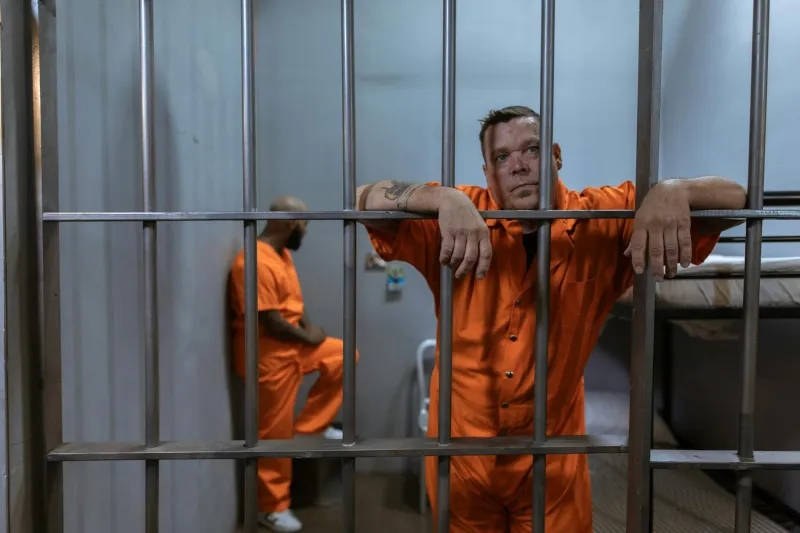
The Scale of America's Unconvicted Prison Population
On any given day in America, approximately 470,000 people languish behind bars without having been convicted of any crime. They are not serving sentences. They have not been found guilty by a jury of their peers. They are simply too poor to buy their freedom while they wait for their day in court—a wait that can stretch for months or even years.
This is the pretrial detention crisis, a humanitarian catastrophe hiding in plain sight within America's criminal justice system. While wealthy defendants post bail and return home to prepare their defense with their families and lawyers, poor defendants—disproportionately Black and Latino—lose their jobs, their housing, and often custody of their children before a single piece of evidence is presented against them.
The numbers are staggering and getting worse. Since 1980, the pretrial detention population has quadrupled, far outpacing both crime rates and the general prison population. Today, pretrial detainees make up nearly two-thirds of the total jail population, representing a fundamental shift in how America's justice system operates—from innocent until proven guilty to detained until proven wealthy.
The Poverty Tax of Pretrial Detention
The pretrial system operates as a wealth-based detention scheme that would be unconstitutional if applied explicitly. A person arrested for shoplifting $100 worth of groceries might face a $5,000 bail—50 times the alleged crime's value. For someone earning minimum wage, that represents two months of gross income. For a wealthy defendant, it's pocket change.
This economic sorting has devastating consequences that extend far beyond the jail cell. Research by the Laura and John Arnold Foundation found that just three days in pretrial detention increases the likelihood of new criminal activity by 17%. After a week, that jumps to 35%. The reason isn't mysterious: detention destroys the stability that keeps people connected to legal employment and housing.
Consider the cascade of consequences. A pretrial detainee earning $15 per hour loses $2,400 in wages after just four weeks—money that could have paid rent, kept utilities on, or covered childcare. Meanwhile, they face mounting legal fees, potential job loss, and the psychological trauma of incarceration. By the time they're released—whether through acquittal, plea bargain, or sentence completion—they often return to communities that have moved on without them.
The Racial Wealth Gap Behind Bars
The pretrial detention system amplifies America's racial wealth disparities with devastating precision. The Federal Reserve's Survey of Consumer Finances reveals that the median white family holds $171,000 in wealth compared to just $17,600 for Black families and $20,700 for Hispanic families. When bail is set at $10,000—a relatively modest amount in many jurisdictions—it represents 57% of median Black family wealth but only 6% of median white family wealth.
These disparities show up clearly in detention rates. According to the Prison Policy Initiative, Black defendants are detained pretrial at nearly twice the rate of white defendants, even when controlling for charge severity and criminal history. In some jurisdictions, the gap is even starker. In Philadelphia, for instance, Black defendants are 40% more likely to be held on money bail than white defendants charged with similar offenses.
The Hamilton Project found that eliminating money bail could reduce the racial detention gap by up to 40%, suggesting that wealth-based detention is a primary driver of racial disparities in the justice system. This isn't just correlation—it's causation rooted in centuries of wealth extraction from communities of color.
The Bail Bond Industry's Stranglehold
Behind this system of wealth-based detention stands a $2 billion industry with every incentive to keep it intact: commercial bail bondsmen. Operating in 46 states, these businesses profit from desperation, charging families non-refundable fees—typically 10-15% of the bail amount—for loans that wealthy defendants don't need.
The industry has spent millions lobbying against pretrial reform, funding opposition research and bankrolling political campaigns. In 2020, bail bond companies spent $1.8 million lobbying Congress and state legislatures, according to the Center for Responsive Politics. Their message is consistent: without money bail, dangerous criminals will flood the streets.
But this fearmongering doesn't match the evidence. The vast majority of pretrial detainees—roughly 75%—are held for nonviolent offenses, including drug possession, property crimes, and technical violations. Many pose no flight risk or public safety threat; they're simply too poor to pay their way out.
Reform Success Stories: Evidence Over Ideology
Several jurisdictions have demonstrated that alternatives to money bail can protect public safety while preserving human dignity. New Jersey's 2017 bail reform law nearly eliminated cash bail for most offenses, replacing it with risk assessments and supervision programs. The results have been remarkable: the pretrial detention population dropped by 44%, while crime rates continued their decades-long decline.
Similarly, Illinois became the first state to completely eliminate cash bail starting in 2023, despite fierce opposition from law enforcement groups and bail bond lobbyists. Early data suggests the reform is working as intended, with no measurable increase in crime rates or failure-to-appear rates.
Washington D.C. provides perhaps the most compelling case study. The city has operated without commercial bail bonds since 1992, instead using a pretrial services agency that provides supervision and support. Result: 85% of defendants are released pretrial, 88% show up for court, and only 2% are rearrested for violent crimes while awaiting trial.
The Human Cost of Delay
Behind every statistic lies a human story of justice delayed and dignity denied. Kalief Browder, arrested at 16 for allegedly stealing a backpack, spent three years at Rikers Island without trial because his family couldn't afford $3,000 bail. He endured solitary confinement, violence, and psychological torture before charges were finally dismissed. Two years after his release, he took his own life.
Browder's story is extreme but not unique. The Brennan Center for Justice found that pretrial detention increases suicide rates by 38%, as defendants face the psychological trauma of incarceration combined with uncertainty about their future. For parents, the stakes are even higher: extended pretrial detention often leads to permanent loss of child custody, even if criminal charges are eventually dropped.
The Path Forward: Justice Cannot Wait
The pretrial detention crisis demands immediate action at every level of government. States should follow Illinois's lead in eliminating cash bail for most offenses, replacing wealth-based detention with evidence-based risk assessments and supervision programs. Federal legislation could provide funding for pretrial services agencies and create national standards for pretrial justice.
Most importantly, we must recognize pretrial detention for what it is: a system that punishes poverty while enriching a predatory industry built on human suffering. In a nation that promises equal justice under law, we cannot continue operating a two-tiered system where freedom depends on the size of your bank account.
America's pretrial detention crisis is a policy choice, not a natural law—and like all policy choices, it can be changed by leaders with the courage to choose justice over profit.