The Invisible Workforce That Keeps America Running
Every morning, millions of American women wake up to perform jobs that never appear on any payroll. They change diapers, pack lunches, drive to doctor's appointments, help with homework, and coordinate family schedules. They care for aging parents, manage household finances, and ensure their families have clean clothes and nutritious meals. According to the Bureau of Labor Statistics, this unpaid caregiving labor is worth an estimated $3.8 trillion annually—nearly 20% of the entire U.S. GDP.
Yet for all this essential work, these women receive no wages, no benefits, no Social Security credits, and no recognition in economic policy. Instead, they face what economists call the "motherhood penalty"—reduced earnings, limited career advancement, and increased financial vulnerability that compounds over their lifetimes.
When Care Work Becomes Women's Work, Everyone Else Profits
The gendered nature of unpaid care work isn't accidental—it's structural. Women perform roughly 75% of all unpaid household labor, with women of color shouldering an even heavier burden due to lower wages that make paid childcare unaffordable and multigenerational family structures that increase eldercare responsibilities.
This arrangement is extraordinarily profitable for everyone except the women doing the work. Employers benefit from workers who show up each day because someone else handled the morning routine, packed the lunch, and arranged after-school care. The government saves billions by avoiding investments in universal childcare, paid family leave, and eldercare support. Meanwhile, women's lifetime earnings suffer permanent damage from career interruptions and reduced hours.
Research from the Institute for Women's Policy Research shows that women lose an average of $324,000 in lifetime wages for each child they have, while men's earnings actually increase after becoming fathers. This isn't because women are less committed to their careers—it's because our economic system assumes someone will perform care work for free, and that someone is almost always a woman.
The International Comparison That Exposes American Exceptionalism
Peer nations have proven that robust public investment in care infrastructure benefits everyone. Sweden's comprehensive parental leave system—480 days that can be shared between parents, with 90 days reserved specifically for fathers—has produced some of the world's highest rates of women's workforce participation. French families receive subsidized childcare starting at age 3, universal pre-K, and monthly family allowances that recognize child-rearing as socially valuable work.
The results are measurable: Swedish women earn 82 cents for every dollar earned by men, compared to 77 cents in the United States. French mothers see minimal career penalties compared to their childless counterparts. These aren't cultural differences—they're policy choices that treat care as a public good rather than a private burden.
The Conservative Counter-Argument Falls Apart Under Scrutiny
Opponents of expanded care infrastructure typically invoke "family values" rhetoric, arguing that government support undermines parental responsibility or traditional family structures. This argument conveniently ignores that the current system already represents massive government intervention—just intervention that subsidizes corporate profits rather than family wellbeing.
When working parents can't afford quality childcare on wages that haven't kept pace with costs, when families go bankrupt paying for eldercare, when women exit the workforce because care responsibilities are incompatible with inflexible job demands, the "free market" isn't working. It's extracting value from women's unpaid labor while leaving families to shoulder risks that other developed nations recognize as collective responsibilities.
The Human Cost of Treating Care as Charity Work
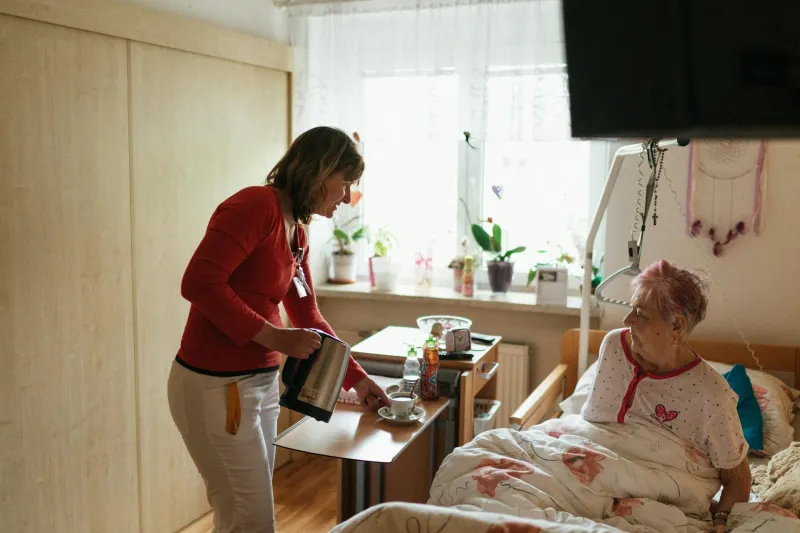
Behind every statistic about the unpaid care economy are real women facing impossible choices. The single mother who turns down overtime because she can't afford extended childcare. The daughter who reduces her hours to care for a parent with dementia, watching her retirement savings evaporate. The professional who accepts a lower-paying job with flexible hours because her partner's career is deemed more important.
These individual struggles reflect systemic failures. When the United States remains the only developed nation without guaranteed paid maternity leave, when quality childcare costs more than college tuition in most states, when eldercare can quickly drain a lifetime of savings, we're not witnessing personal failings—we're seeing the predictable consequences of treating essential social reproduction as women's unpaid responsibility.
Building an Economy That Values All Labor
Transforming America's care economy requires recognizing that care work is real work deserving of real compensation and support. This means universal childcare, guaranteed paid family leave, eldercare support, and labor protections for care workers. It means Social Security credits for caregiving years and tax policies that don't penalize families for having children.
Most fundamentally, it means rejecting the fiction that care happens naturally and costs nothing. Every hour a woman spends on unpaid caregiving is an hour she's not building career capital, saving for retirement, or pursuing her own goals. The current system socializes these costs onto women while privatizing the benefits for everyone else.
The unpaid care economy isn't a family issue or a women's issue—it's an economic justice issue that reveals how deeply our supposedly merit-based system depends on exploiting women's labor while pretending it doesn't exist.