The Promise vs. The Street
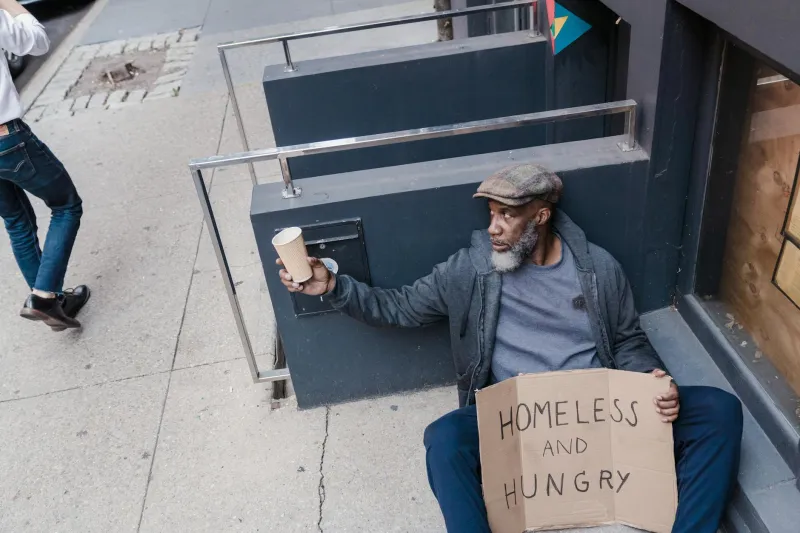
On any given night, more than 35,000 American veterans sleep without shelter—in cars, under bridges, or in makeshift encampments that have become permanent fixtures in cities across the nation. This staggering figure represents not just individual tragedies, but a systemic betrayal of the social contract between America and those who served in its military.
The Department of Veterans Affairs received $301 billion in funding for fiscal year 2024, with housing assistance programs alone accounting for over $3 billion annually. Yet despite this massive investment and decades of bipartisan promises to "end veteran homelessness," the crisis persists with stubborn resilience. The question isn't whether America has the resources to house its veterans—it's whether our systems are designed to actually deliver that housing.
The Bureaucratic Maze
The path from military service to stable housing shouldn't require navigating a labyrinth of disconnected agencies, contradictory eligibility requirements, and arbitrary waiting periods. Yet that's exactly what veterans face when seeking assistance through the VA's housing programs.
The HUD-VASH program, which combines VA case management with Housing Choice Vouchers, has been hailed as a success story. On paper, it looks impressive: over 100,000 veterans housed since 2008. But the waiting lists tell a different story. In major metropolitan areas, veterans can wait 18 months or longer for a voucher, assuming they can maintain stable contact information and meet increasingly complex documentation requirements while living on the streets.
Even securing a voucher doesn't guarantee housing. Private landlords routinely reject voucher holders, despite fair housing protections. A 2023 investigation by the National Low Income Housing Coalition found that voucher discrimination affects veterans at disproportionate rates, with landlords citing everything from credit checks to "neighborhood standards" as reasons to refuse rental applications.
Mental Health: The Missing Link
The intersection of veteran homelessness and mental health reveals the most damning failures of our current approach. An estimated 25% of homeless veterans suffer from serious mental illness, while substance abuse affects nearly 35% of this population. Yet VA mental health services remain chronically understaffed and underfunded relative to demand.
The average wait time for a mental health appointment at VA facilities is 22 days—an eternity for someone in crisis. Rural veterans face even longer delays, with some traveling hundreds of miles for specialized trauma care. This treatment gap isn't accidental; it's the predictable result of prioritizing hardware over healthcare, military expansion over veteran care.
Worse still, the VA's approach to mental health often criminalizes the symptoms it fails to treat. Veterans with PTSD who struggle with authority figures may be labeled "non-compliant" and dropped from programs. Those who self-medicate with alcohol or drugs face automatic disqualification from many housing services, creating a cruel catch-22 where the most vulnerable veterans are systematically excluded from help.
The Corporate Predators
While veterans struggle to access basic housing assistance, a parallel economy has emerged to profit from their desperation. Predatory landlords specifically target veteran voucher holders, knowing they can charge inflated rents while providing substandard housing. These "slumlords" collect guaranteed government payments while veterans live in mold-infested apartments and crumbling buildings.
Private companies contracted to provide veteran services have similarly exploited the system. Several major contractors have faced federal investigations for billing fraud, with some charging the government for services never provided while veterans remained on the streets. The privatization of veteran care has created perverse incentives where corporate profits matter more than veteran outcomes.
Beyond Individual Solutions
Conservative critics often frame veteran homelessness as an individual failing—a matter of personal responsibility or character defects. This narrative conveniently ignores the structural forces that push veterans into homelessness: the lack of affordable housing, inadequate mental health infrastructure, and an economy that undervalues military skills in civilian contexts.
The evidence contradicts this individualistic framing. Veterans experiencing homelessness are disproportionately likely to be people of color, women, and LGBTQ+ individuals—groups that face additional barriers to housing and employment even without military service. The problem isn't individual weakness; it's systemic inequality compounded by institutional neglect.
The Path Forward
Several cities have demonstrated that veteran homelessness is solvable when political will meets adequate resources. Houston has reduced its veteran homeless population by over 60% through coordinated outreach, rapid rehousing, and landlord incentive programs. The key difference: treating housing as a right rather than a privilege earned through bureaucratic compliance.
Congress could transform veteran housing outcomes overnight by expanding voucher availability, strengthening anti-discrimination enforcement, and funding comprehensive mental health services. But such reforms require acknowledging that our current approach isn't working—a politically uncomfortable truth that challenges decades of bipartisan rhetoric about supporting the troops.
The Moral Reckoning
Every veteran sleeping on America's streets represents a choice—not their choice, but ours. We chose to spend $2 trillion on wars in Iraq and Afghanistan while underfunding the VA hospitals that would treat the wounded. We chose to expand military budgets while cutting social programs that prevent homelessness. We chose to celebrate veterans in parades while ignoring them in policy.
The veteran homelessness crisis isn't a natural disaster or an unavoidable tragedy—it's the predictable outcome of a society that values military symbolism over veteran welfare, corporate profits over human dignity, and political rhetoric over policy substance.
Until America decides that its veterans deserve more than empty gratitude and campaign photo ops, our streets will remain a monument to our national hypocrisy—and our veterans will continue paying the price for our collective moral failure.