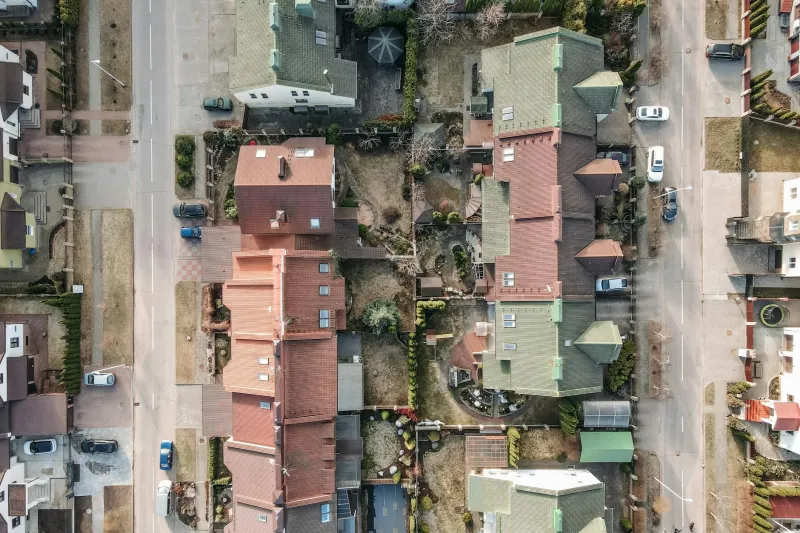
In 1926, the Supreme Court handed down a decision that would reshape American cities for generations to come. Village of Euclid v. Ambler Realty Co. didn't just legalize zoning — it blessed the most effective tool of racial segregation the country had ever devised. Single-family zoning laws, dressed up in the neutral language of "orderly development" and "neighborhood character," were actually surgical instruments designed to keep Black and brown families out of white communities.
Nearly a century later, those same laws are still doing exactly what they were built to do.
The Architecture of Exclusion
When the Supreme Court struck down explicit racial deed covenants in 1948's Shelley v. Kraemer, white communities didn't abandon segregation — they just got more creative about it. Single-family zoning became the new redlining, a perfectly legal way to maintain racial boundaries without ever mentioning race.
The mechanics were elegant in their cruelty. By requiring large minimum lot sizes, mandating single-family homes only, and prohibiting duplexes or small apartment buildings, these ordinances ensured that only the wealthiest families could afford to live in desirable neighborhoods. Since discriminatory lending practices and employment discrimination had systematically excluded Black families from wealth accumulation, single-family zoning effectively locked them out while maintaining plausible deniability.
Today, three-quarters of residential land in most American cities is zoned exclusively for single-family homes. This isn't an accident of urban planning — it's the intended outcome of a system designed to hoard opportunity.
The Wealth Gap by Design
The consequences of exclusionary zoning extend far beyond housing. Homeownership has been the primary vehicle for middle-class wealth building in America, and zoning laws have systematically denied that pathway to families of color. The numbers tell the story: the median white family holds $171,000 in wealth compared to just $17,600 for Black families and $20,700 for Hispanic families, according to Federal Reserve data.
This isn't just about individual families missing out on homeownership — it's about entire communities being cut off from the resources that flow to well-funded neighborhoods. When zoning laws concentrate poverty by preventing mixed-income development, they also concentrate underfunded schools, limited transit access, and fewer economic opportunities.
Consider the typical pattern: affluent suburbs use zoning to block apartments and condominiums, forcing working families into distant neighborhoods with longer commutes, worse schools, and fewer services. Meanwhile, property values in the exclusionary communities continue to rise, creating a self-perpetuating cycle of advantage for those already inside the wall.
The Polite Language of Exclusion
Modern defenders of single-family zoning rarely invoke explicit racial arguments — they don't have to. Instead, they deploy a familiar vocabulary of "neighborhood character," "property values," and "quality of life." But scratch beneath the surface, and the same exclusionary impulses emerge.
When residents pack zoning board meetings to oppose a modest apartment complex, their concerns about "traffic" and "density" often mask deeper anxieties about who might move in. The coded language is so well-established that everyone understands the subtext: apartments mean renters, renters mean transience, and transience means the wrong kind of people.
This isn't speculation — it's documented history. As legal scholar Richard Rothstein demonstrates in The Color of Law, the architects of exclusionary zoning were explicit about their racial intentions. They just learned to speak more carefully once overt discrimination became legally problematic.
 Photo: Richard Rothstein, via d3lf1kenz29v4j.cloudfront.net
Cities Breaking Down the Wall
The good news is that a growing number of cities are recognizing single-family zoning for what it is: a barrier to equity that no longer serves the public good. Minneapolis made national headlines in 2018 when it became the first major city to eliminate single-family zoning citywide, allowing duplexes and triplexes in every neighborhood.
Portland, Oregon followed suit, and California passed legislation requiring cities to allow duplexes on single-family lots. These aren't radical departures from American housing tradition — they're returns to the diverse, mixed-income neighborhoods that characterized most cities before exclusionary zoning took hold.
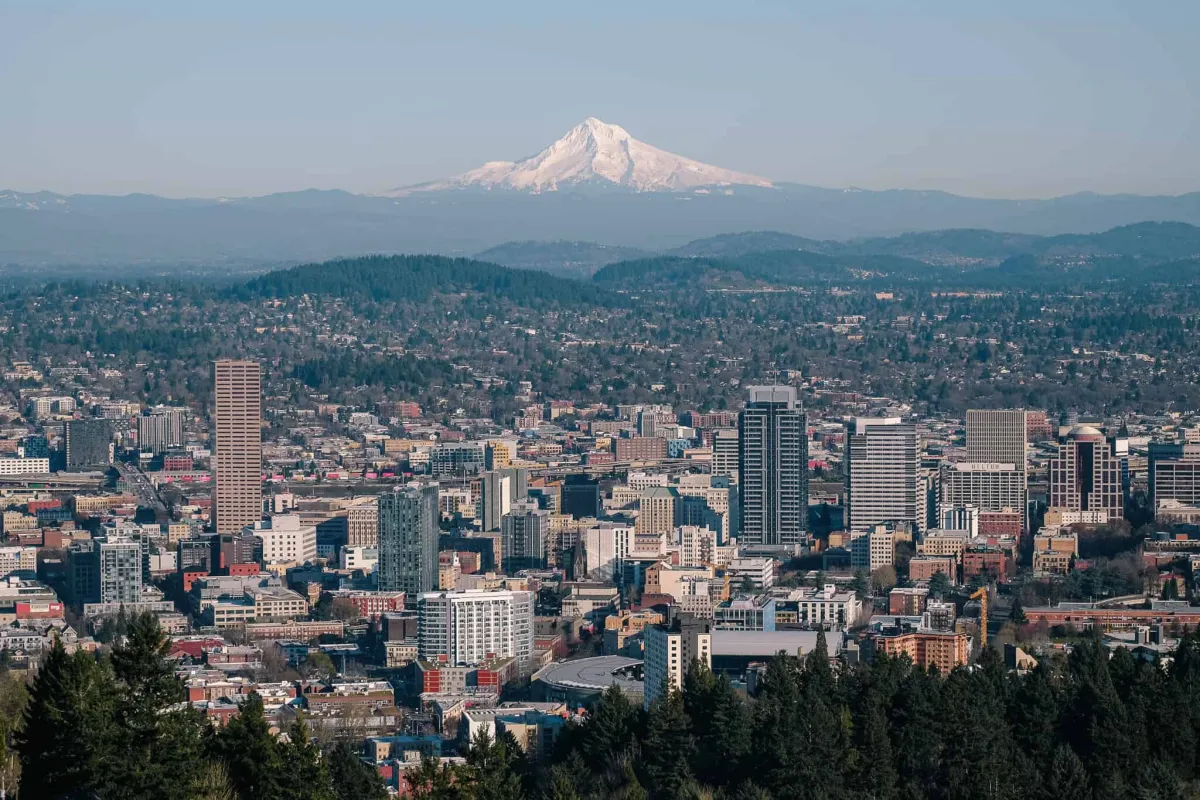 Photo: Portland, Oregon, via sustainablecities.travel
Early results are promising. Minneapolis has seen a 50% increase in housing permits since the change, with new construction spreading across previously off-limits neighborhoods. More importantly, the city is creating pathways for families who were previously priced out to build wealth through homeownership.
The Path Forward
Eliminating single-family zoning isn't about forcing density on unwilling communities — it's about removing artificial barriers to choice and opportunity. When cities allow gentle density like duplexes and small apartment buildings, they create more housing options at different price points while maintaining neighborhood scale and character.
The opposition will be fierce. Homeowners who've benefited from exclusionary zoning have powerful incentives to maintain the status quo, and they'll deploy every argument from traffic concerns to school overcrowding to preserve their advantages. But the moral case is clear: in a country facing a housing affordability crisis and a persistent racial wealth gap, we can no longer afford policies designed to hoard opportunity.
The zoning wall has stood for nearly a century, but its foundations are finally cracking — and it's about time we finished tearing it down.