The Gatekeepers of Higher Education: How Unaccountable Accreditors Decide Which Colleges Live, Which Die, and Who Gets Left Out

The Invisible Hand Over Higher Education
Most Americans who have attended college have never heard of their institution's accrediting agency. That ignorance is, in a sense, by design. Accreditation operates in the bureaucratic background of higher education — a credentialing process managed by private, nonprofit organizations that the federal government has authorized to determine which colleges meet minimum standards of quality. Pass that threshold, and your students can access Pell Grants, federal loans, and the full machinery of federal higher education funding. Fail — or lose accreditation — and your institution is effectively dead.
This is enormous power. It is power exercised by bodies that are not elected, not directly accountable to Congress, and not subject to the kind of public transparency we would demand of any government agency making decisions of equivalent consequence. And it is power that, in practice, has functioned less as a neutral quality-control mechanism than as a structural advantage for established institutions — one that has made it significantly harder for the colleges serving America's most marginalized students to survive, grow, or innovate.
How the System Works — and Who It Works For
The accreditation landscape in the United States is divided between regional accreditors — the most prestigious tier, whose approval is essentially required for an institution to be taken seriously — and national accreditors, who have historically overseen for-profit and vocational institutions. The Department of Education recognizes roughly two dozen accrediting bodies, but the regional accreditors, seven organizations covering geographic swaths of the country, hold the real power. A degree from a regionally accredited institution is accepted for transfer credit and graduate school admission. A degree from a nationally accredited one often is not. That distinction shapes institutional prestige, student mobility, and long-term economic outcomes in ways that are rarely made explicit to the students choosing between them.
Within this framework, the accreditation process itself — a peer-review system in which existing institutions evaluate their peers — carries a built-in conservatism. Standards developed by and for traditional four-year residential colleges do not map cleanly onto the operational realities of institutions that serve different student populations through different delivery models. Community colleges, which disproportionately serve first-generation students, students of color, and working adults, have long reported that accreditation standards designed around research universities create compliance burdens that consume resources those institutions can ill afford to spare.
For Historically Black Colleges and Universities, the stakes are even higher and the history more fraught. HBCUs were born in an era when Black students were legally excluded from predominantly white institutions. Many were accredited late, underfunded throughout their histories, and have carried the compounding disadvantages of that exclusion into the present. When accreditors place HBCUs on warning or probation — as has happened with several institutions in recent years, including Lincoln University of Missouri and several others — the financial consequences are immediate and severe. Enrollment drops as prospective students fear losing access to federal aid. Donors retreat. Faculty leave. The institutions that have done the most to expand educational access for Black Americans are placed, by an unaccountable private body, in a death spiral.
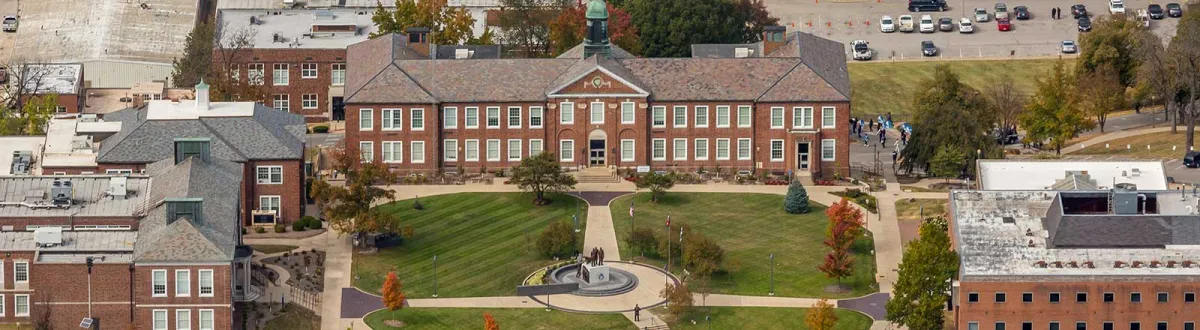 Photo: Lincoln University of Missouri, via www.lincolnu.edu
The Political Weaponization Problem
The accreditation system's opacity has made it attractive to political actors on both ends of the spectrum who recognize that controlling accreditors means controlling which institutions can access federal dollars — and, by extension, what kinds of education get produced.
The Trump administration's first term saw explicit pressure on accreditors to approve institutions that had faced scrutiny for academic quality concerns. More recently, conservative state governments have sought to use accreditation challenges as leverage against universities they perceive as too progressive, while the Biden administration moved to expand accreditor recognition in ways that critics argued loosened quality standards. Neither posture is a defense of the students the system is supposed to protect.
The deeper problem is structural: when an opaque private body holds life-or-death power over public institutions serving public interests, it becomes a target for whoever holds political power. The solution is not to find better people to run the cartel. It is to democratize and restructure the system itself.
The Students Who Pay the Price
Abstract governance failures have concrete human consequences. Consider the student who enrolls at a small HBCU, takes out federal loans to finance her education, and then watches the institution lose accreditation mid-degree. Her credits may not transfer. Her loans remain. Her degree, if she manages to finish elsewhere, carries an asterisk that follows her into the job market. The accreditation system failed her — but the debt is hers alone.
Or consider the community college student — disproportionately likely to be a working adult, a person of color, a first-generation college-goer — whose institution operates under accreditation conditions that limit its ability to expand programs, hire faculty, or invest in student support services. The accreditor's standards were written for a different kind of institution serving a different kind of student. The mismatch is not the student's problem until it becomes, entirely, the student's problem.
According to the National Center for Education Statistics, students at community colleges and HBCUs are significantly more likely to receive Pell Grants than students at flagship research universities — meaning they are more financially dependent on federal aid and therefore more directly exposed to the consequences of accreditation instability. The system's failures fall hardest on the students who have the fewest alternatives.
What Reform Actually Looks Like
The strongest defense of the current accreditation system is that it prevents a free-for-all in which predatory institutions — the for-profit college sector has provided ample evidence of what that looks like — access federal funds without meeting basic quality thresholds. That concern is legitimate. The for-profit college scandals of the 2000s and 2010s, in which institutions like Corinthian Colleges and ITT Tech left hundreds of thousands of students with worthless credentials and crushing debt, are a real cautionary tale.
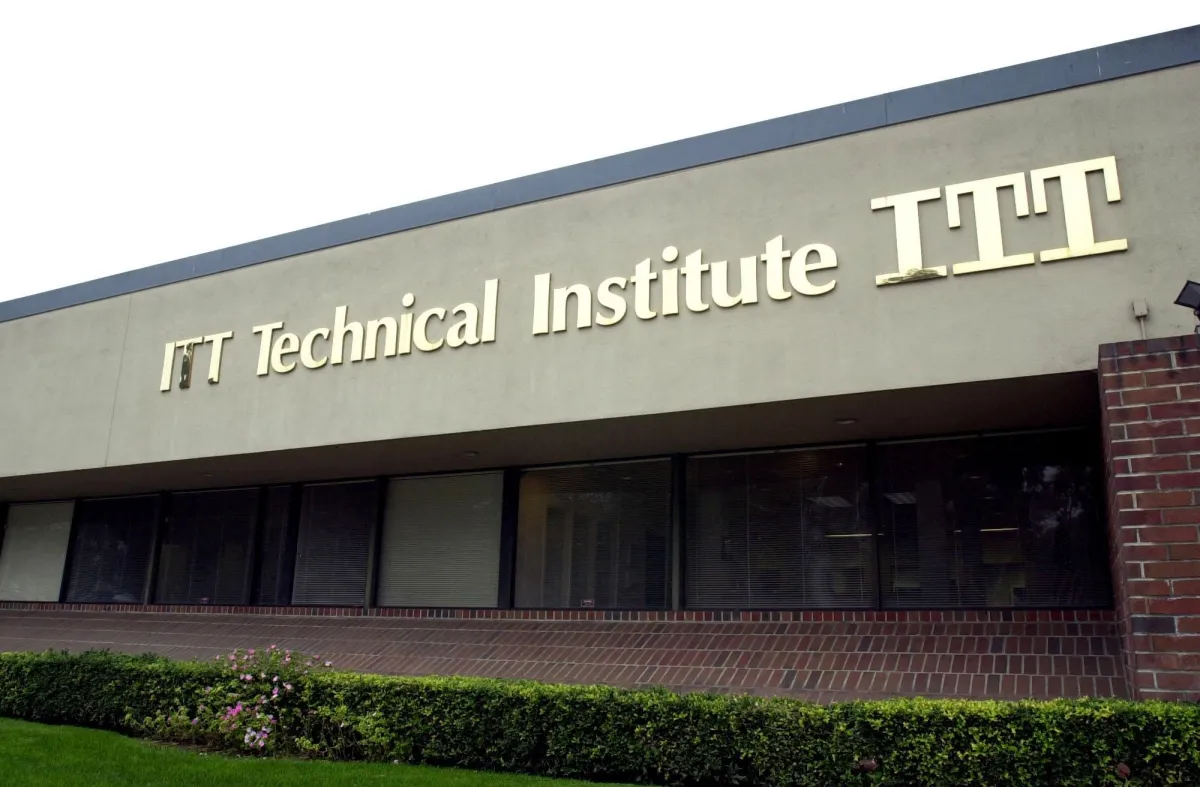 Photo: ITT Tech, via imageio.forbes.com
But the answer to predatory institutions is not an unaccountable private cartel. It is transparent, publicly administered quality standards with democratic accountability, differentiated criteria that recognize the genuine differences between institution types, and an appeals process that does not require a struggling HBCU to mount a years-long bureaucratic defense against a body that answers to no one in particular.
Congress has the authority to restructure the accreditor recognition process. The Department of Education has regulatory tools it has barely begun to deploy. What is lacking is not legal authority. It is political will — and the recognition that the students being failed by this system are, by and large, not the students whose parents call their senators.
The Verdict
An unelected, unaccountable private cartel that decides which colleges survive and which students get access to federal aid is not a quality-control system — it is a power structure, and the students it most consistently fails are the ones America can least afford to abandon.