Broken Bodies, Billion-Dollar Profits: The Engineered Injury Crisis Inside America's Warehouse Economy
Broken Bodies, Billion-Dollar Profits: The Engineered Injury Crisis Inside America's Warehouse Economy
In 2023, Amazon reported net sales of $574.8 billion. In the same year, the Strategic Organizing Center — a coalition of labor unions that has tracked Amazon's safety record since 2020 — published data showing that Amazon warehouse workers were injured at a rate of 6.9 serious injuries per 100 workers annually, compared to an industry average of 3.4. Amazon's injury rate was more than double that of its competitors. The company's response to this finding, as it has been to similar findings in prior years, was to contest the methodology.
The math here is not complicated, but its implications are routinely obscured by the framing of logistics as a neutral, technical enterprise — a supply chain, not a labor system. Inside that supply chain are approximately 1.5 million Amazon employees in the United States alone, the majority of them warehouse and delivery workers, and a growing body of evidence suggests that the system they work within is not simply demanding. It is, by measurable outcome, injurious by design.
The Algorithm as Foreman
The central mechanism driving Amazon's injury rates is not negligence in the conventional sense. It is optimization — a productivity management system that tracks workers' output in real time, measures their performance against algorithmic targets, and disciplines or terminates those who fall short. Amazon calls this system "Time Off Task" monitoring. Workers call it something less printable.
The targets are not static. They are calibrated to the output of the facility's fastest workers, creating a perpetual upward ratchet. A worker who keeps pace with the current benchmark helps set a higher one. There is no equilibrium point at which the algorithm is satisfied — only a moving threshold that workers must meet or risk termination.
The physical consequences of this system are well-documented. Musculoskeletal injuries — strains, sprains, and repetitive stress injuries to the back, shoulders, wrists, and knees — dominate Amazon's injury reports. The New York State Attorney General's office, in a 2021 investigation, found that Amazon's productivity quotas were "dangerous" and that the company had "failed to keep workers safe from the hazards of their work." A subsequent report from the U.S. Senate Committee on Health, Education, Labor, and Pensions found that Amazon's injury rates at specific facilities were as high as three times the industry average.
Workers describe skipping bathroom breaks to avoid falling behind on rate. They describe pushing through pain because reporting an injury triggers scrutiny of their productivity records. They describe working through heat in facilities that, until public pressure forced change, frequently lacked adequate cooling — a condition that contributed to heat-related illnesses documented by OSHA inspectors in multiple states.
Fines That Don't Register
The regulatory response to this documented pattern has been, to put it charitably, insufficient. OSHA — the federal agency responsible for workplace safety enforcement — has cited Amazon at multiple facilities over multiple years. The fines imposed have been, in virtually every case, trivially small relative to the company's financial scale.
In 2023, OSHA proposed a penalty of $15,625 against an Amazon facility in Deltona, Florida, following an inspection that found ergonomic hazards contributing to worker injuries. That same quarter, Amazon reported operating income of approximately $8.7 billion. The fine represented, in rough terms, less than a single second of the company's quarterly earnings.
 Photo: Deltona, Florida, via wondrousdrifter.com
This is not an accident of calculation. It is a structural consequence of OSHA's penalty caps, which have not kept pace with corporate scale despite periodic legislative adjustments. The maximum penalty for a willful OSHA violation — the most serious category — was $156,259 per violation as of 2024. For a company generating hundreds of billions in annual revenue, this is not a deterrent. It is a rounding error in the safety budget, and Amazon's legal and compliance teams know it.
The agency is also chronically understaffed. According to the AFL-CIO's annual Death on the Job report, OSHA employs roughly 1,850 inspectors to cover approximately 11 million workplaces nationwide. At current staffing levels, the agency could inspect each workplace once every 150 years. Amazon's lobbying expenditures — which totaled more than $20 million in 2022 according to OpenSecrets — help ensure that legislative efforts to strengthen OSHA's authority and funding rarely gain traction.
Who Gets Hurt
The workforce absorbing these injuries is not demographically random. Amazon's fulfillment centers are disproportionately located in communities with limited alternative employment — post-industrial Midwestern towns, rural Southern counties, and the outer-ring suburbs of major metro areas where warehouse construction has followed the availability of cheap land and non-unionized labor. The workers in these facilities are disproportionately Black, Latino, and immigrant, drawn by wages that compare favorably to other available local options even as they fall short of what genuine economic security requires.
This geography is not coincidental. It is a deliberate site-selection strategy that exploits labor market conditions to minimize organizing risk and maximize employer leverage. When your warehouse is the largest employer in a county with 8 percent unemployment, workers are far less likely to file safety complaints, speak to journalists, or vote to unionize — because the cost of retaliation, implicit or explicit, is too high to bear.
A 2020 investigation by The Guardian documented Amazon workers in facilities across the United States describing pressure not to report injuries, fear of losing their jobs if they took medical leave, and a culture in which pushing through pain was normalized and expected. These accounts were not outliers. They were patterns.
The Union Question
The most direct mechanism available to workers seeking to address these conditions is collective bargaining — the ability to negotiate over productivity standards, safety protocols, break times, and the right to refuse unsafe work without retaliation. Amazon has spent enormous resources resisting this mechanism.
The company's response to the 2021 unionization vote at its Staten Island facility — which resulted in the first successful Amazon union election in U.S. history, forming the Amazon Labor Union — included a documented campaign of mandatory anti-union meetings, surveillance of worker organizing activity, and subsequent legal challenges to the election result. The National Labor Relations Board found merit in multiple unfair labor practice charges filed by the ALU against Amazon in the years following the vote.
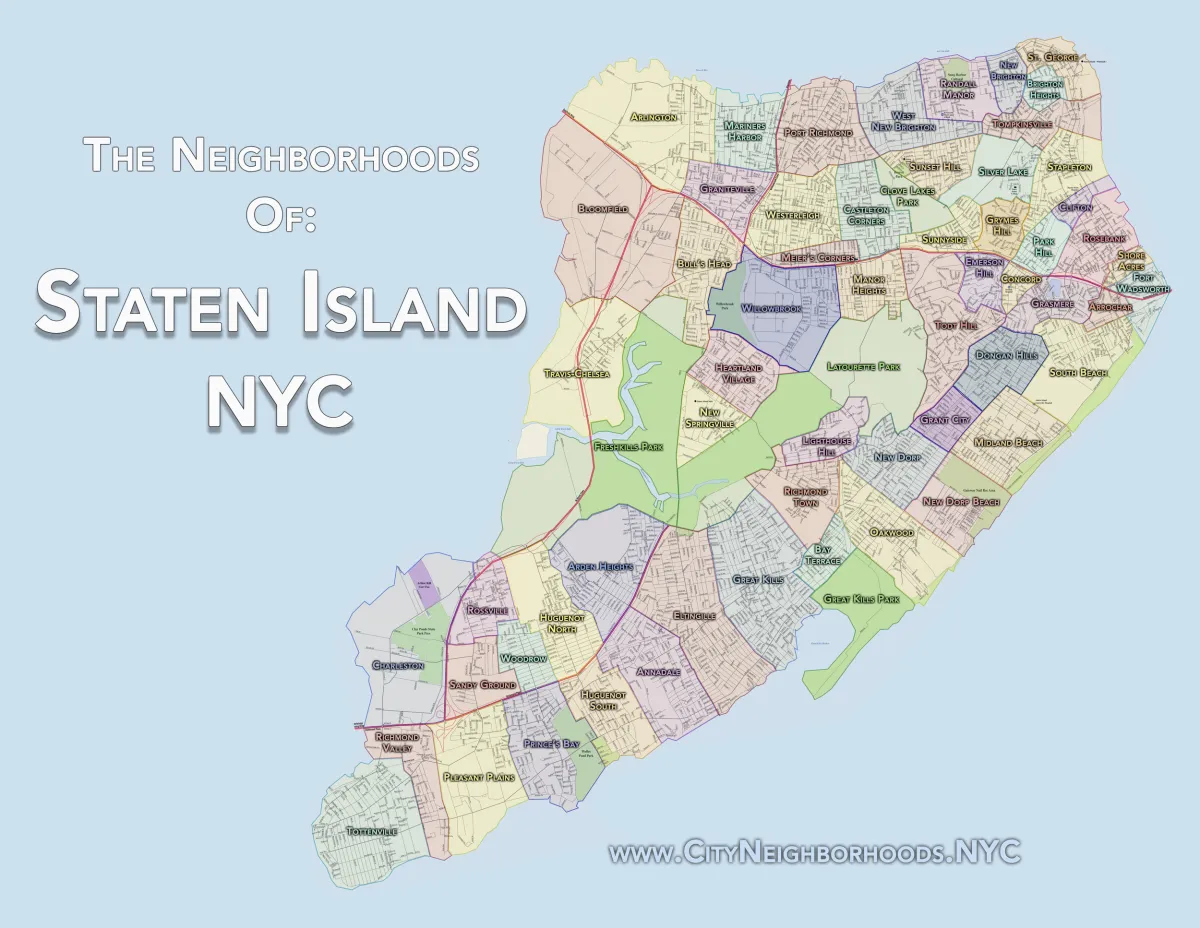 Photo: Staten Island, via images.squarespace-cdn.com
The broader logistics industry has followed a similar playbook. Warehouse workers at non-Amazon facilities operated by third-party logistics companies — which handle fulfillment for a wide range of retailers — report comparable productivity pressures, comparable injury rates, and comparable resistance to organizing. The supply chain model has been deliberately structured to distribute legal liability across layers of contractors and subcontractors, making it difficult to hold any single company accountable for conditions that are, in practice, industry-wide.
The True Cost of Two-Day Delivery
The consumer convenience of next-day and two-day delivery is real, and the economic model that sustains it has genuine popular support. But that model has an externalized cost — one that does not appear in Amazon's quarterly earnings reports or its Prime membership fee, but that shows up in workers' medical bills, disability claims, and lost wages.
A genuinely accountable policy response would include OSHA penalty reform that scales fines to corporate revenue rather than imposing flat caps; mandatory ergonomic standards for warehousing operations with enforceable productivity rate limits; robust whistleblower protections for workers who report safety violations; and serious antitrust scrutiny of Amazon's market power in the logistics sector, which allows it to set labor conditions that ripple throughout the supply chain.
None of these reforms are radical. Most have precedents in peer democracies. What they require is a political class willing to treat the bodies of warehouse workers as a matter of public concern rather than a private cost to be managed through lobbying and litigation.
Every package delivered in two days carries a price that doesn't appear at checkout — and the people paying it can't afford to keep subsidizing the rest of us.