The Arbitration Wall: How Nursing Homes Use Secret Contracts to Hide Elder Abuse From Families and Courts
The Fine Print That Kills
When Margaret Thompson signed the admission papers for her 82-year-old mother's entry into Sunset Manor nursing home in Phoenix, she thought she was securing care for a woman who had raised five children and worked as a teacher for forty years. Buried on page 47 of the intake documents, however, was a clause that would later prevent Thompson from seeking justice when her mother died from infected bedsores that staff had left untreated for weeks.
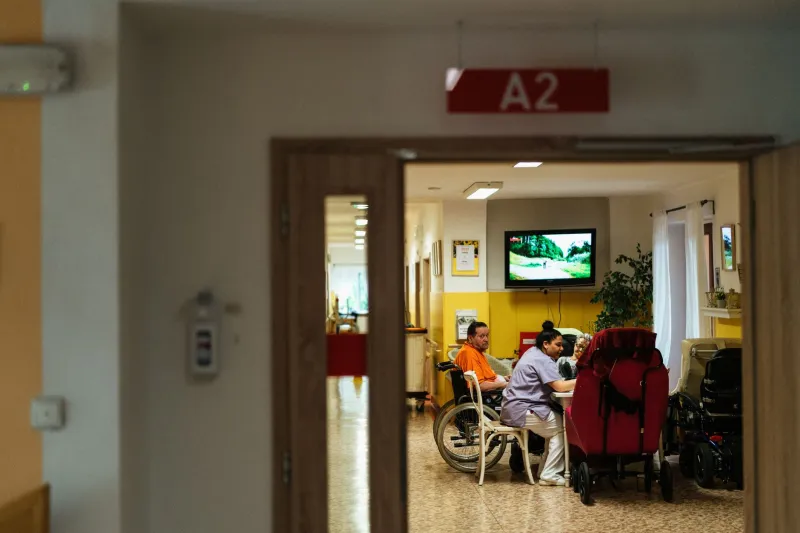
 Photo: Sunset Manor, via www.teahub.io
That clause was a pre-dispute arbitration agreement — a legal mechanism that forces families to resolve abuse and neglect claims in private arbitration rather than open court. Today, an estimated 85% of nursing homes require residents to sign these agreements as a condition of admission, effectively creating a parallel justice system where elder abuse is adjudicated in secret, away from juries, journalists, and regulatory oversight.
The Industry's Systematic Shield
The widespread adoption of arbitration clauses in long-term care represents one of the most successful corporate accountability evasion schemes in American healthcare. Unlike traditional lawsuits, arbitration proceedings are confidential by design. There are no public records of settlements, no judicial opinions establishing precedent, and no transparency about patterns of abuse that might warn other families or inform regulatory action.
This secrecy serves the industry's financial interests in multiple ways. First, it prevents the kind of large jury verdicts that might otherwise force nursing homes to invest in adequate staffing and safety measures. Second, it keeps systematic problems hidden from state regulators who rely on court records and media reports to identify facilities requiring intervention. Third, it shields corporate owners — increasingly private equity firms — from reputational damage that might affect their other investments.
The numbers tell the story of an industry that has chosen profit over protection. According to the National Academy of Sciences, nursing home residents suffer approximately 380,000 instances of abuse annually, yet fewer than 1 in 24 cases are ever reported to authorities. Meanwhile, the long-term care industry generates over $170 billion annually while maintaining chronic understaffing that research directly links to preventable deaths.
The Rollback That Opened the Floodgates
For a brief period, it seemed federal regulators might restore residents' rights. In 2016, the Obama administration's Centers for Medicare and Medicaid Services (CMS) issued a rule prohibiting nursing homes from requiring pre-dispute arbitration agreements as a condition of admission. The rule recognized that nursing home residents, often suffering from dementia or facing urgent medical needs, cannot meaningfully consent to surrendering their legal rights.
But in 2017, the Trump administration's CMS reversed course, arguing that arbitration agreements represented "freedom of contract" and might reduce healthcare costs by limiting litigation. The industry celebrated. Within months, nursing home chains that had temporarily suspended mandatory arbitration clauses reinstated them with renewed vigor.
The reversal came despite overwhelming evidence that arbitration systematically favors corporate defendants. A 2019 Economic Policy Institute analysis found that employees win arbitration cases only 21% of the time, compared to 57% in federal court. For nursing home residents — who are often elderly, isolated, and cognitively impaired — the odds are even worse.
Who Bears the Cost
The arbitration system doesn't just hide abuse — it amplifies existing inequalities in who experiences it. Low-income seniors, disproportionately people of color, are most likely to end up in understaffed, for-profit nursing homes that rely heavily on Medicaid reimbursement. These facilities, squeezed by low government payment rates, often cut corners on staffing and safety while simultaneously requiring the most restrictive arbitration clauses.
A 2021 Government Accountability Office study found that nursing homes with higher percentages of Black and Latino residents had significantly more health violations and were more likely to require mandatory arbitration. These residents' families, often lacking resources to hire attorneys willing to take arbitration cases with limited financial upside, frequently have no recourse when abuse occurs.
The geographic concentration of arbitration-heavy nursing homes in rural and low-income urban areas means that entire communities are effectively cut off from the court system when seeking accountability for elder abuse. This represents a form of legal redlining, where zip code determines access to justice.
The Legislative Fight for Transparency
Recognizing the scope of the problem, congressional Democrats have repeatedly introduced legislation to restore nursing home residents' rights. The Justice for Nursing Home Victims Act, reintroduced in 2023, would prohibit pre-dispute arbitration agreements in long-term care facilities receiving federal funding — essentially all of them.
The industry's opposition has been fierce and well-funded. The American Health Care Association, representing for-profit nursing homes, has spent over $2 million annually on lobbying against arbitration restrictions. Their argument — that litigation drives up costs — ignores the reality that accountability mechanisms actually improve care quality and reduce long-term expenses.
Supporters of reform point to evidence from states that have restricted nursing home arbitration clauses. In California, which prohibited such agreements in 2001, nursing home quality metrics consistently outperform national averages, while legal costs have remained stable.
The Broader Threat to Democratic Accountability
The nursing home arbitration crisis exemplifies a broader erosion of public accountability in American healthcare. When systematic abuse is hidden behind confidentiality agreements, the democratic process of regulatory oversight and public debate becomes impossible. Citizens cannot demand better policies if they don't know the scope of the problem.
This opacity also undermines market mechanisms that might otherwise drive improvement. Families researching nursing homes cannot access information about facilities' track records on abuse and neglect, making informed choices impossible. The result is a market failure where the worst actors face no competitive pressure to improve.
The nursing home industry's embrace of forced arbitration represents a fundamental rejection of the principle that institutions caring for society's most vulnerable members should be subject to public oversight and accountability.
Beyond Individual Justice
While much attention focuses on individual families denied their day in court, the broader social cost of nursing home arbitration may be even greater. When abuse cases disappear into private arbitration, patterns of systematic neglect remain hidden from researchers, policymakers, and the public health officials charged with protecting vulnerable populations.
This information blackout has real consequences for policy development. Without comprehensive data on nursing home abuse patterns, legislators cannot craft targeted interventions. Regulators cannot identify facilities requiring immediate attention. And the public cannot hold elected officials accountable for the adequacy of elder care oversight.
The COVID-19 pandemic offered a glimpse of what transparency might reveal. When nursing home death rates became public, the data exposed decades of chronic understaffing and inadequate infection control that arbitration clauses had previously kept hidden. The result was unprecedented public pressure for nursing home reform — pressure that only became possible when the scope of the crisis became visible.
America's nursing homes have built a system where abuse thrives in darkness, shielded by contracts that most families never understand they're signing — and the cost is measured not just in individual suffering, but in the systematic erosion of the accountability that democracy requires.