Bureaucratic Betrayal: Veterans Are Dying While the VA Claims System Buries Their Files

The Wait That Kills
Somewhere in a stack of unprocessed files at a regional VA office, there is a claim submitted by a veteran who is no longer alive to see it resolved. This is not a hypothetical. It is a documented, recurring feature of the Department of Veterans Affairs disability compensation system — a bureaucratic reality so normalized that it has acquired its own grim administrative category: the "pending death" claim, processed after a veteran dies, with benefits redirected, if the family is fortunate and persistent, to surviving dependents.
 Photo: Department of Veterans Affairs, via c8.alamy.com
As of early 2025, the VA's benefits backlog — defined as claims pending for more than 125 days — has swelled to levels that advocates describe as a crisis with no serious political response. Reporting from Military Times, the VA itself, and veterans service organizations including the Disabled American Veterans (DAV) and Veterans of Foreign Wars (VFW) has documented wait times stretching well past a year for complex disability claims, with the appeals process adding years more for veterans who contest denied or underrated decisions. The human cost of those delays is not measured in inconvenience. It is measured in financial ruin, deteriorating health, and, in the worst cases, death.
 Photo: Disabled American Veterans, via clipground.com
How a System Designed to Help Became a Labyrinth Built to Exhaust
The VA disability compensation system was not designed to be cruel. It was designed — in theory — to ensure that veterans who incur service-connected injuries or illnesses receive financial support proportional to their disabilities. In practice, the system has evolved into something that functions less like a benefits delivery mechanism and more like an endurance test.
A veteran filing a disability claim must gather medical evidence, service records, and nexus documentation linking their condition to military service — a process that is genuinely complex and that many veterans navigate without legal representation. The VA then assigns a rating, expressed as a percentage of disability, which determines the monthly compensation amount. That rating can be contested. The appeal can be contested. The process has multiple lanes, multiple timelines, and multiple opportunities for delay — and relatively few structural incentives for swift resolution.
Understaffing at VA regional offices has been a chronic problem for decades. The VA employed approximately 19,000 claims processors as of recent reporting, a workforce that advocates and independent analysts have consistently described as inadequate given the volume and complexity of incoming claims. The post-9/11 generation of veterans — many of whom served multiple combat deployments and carry the compounding physical and psychological wounds of prolonged warfare — has driven a surge in claims volume that the system was not built to absorb. Burn pit exposure, now formally recognized through the PACT Act signed by President Biden in August 2022, has added hundreds of thousands of additional eligible veterans to the queue.
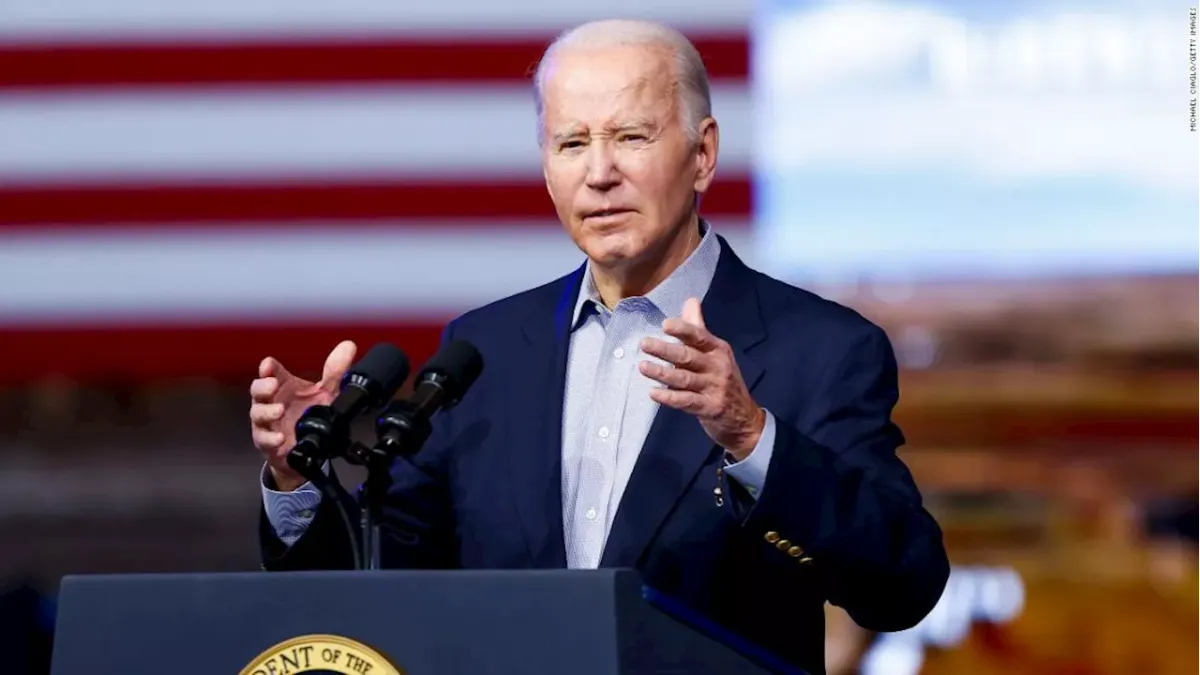 Photo: President Biden, via i.headtopics.com
The PACT Act was a genuine legislative achievement, expanding VA eligibility to veterans exposed to toxic burn pits and other hazardous materials. But expanding eligibility without a commensurate expansion of processing capacity is a promise that the system cannot keep. The VA reported receiving more than 1.7 million claims in fiscal year 2023 alone — a volume that its current staffing levels cannot process without delays that stretch into years.
The Financial Freefall Behind the Wait
For veterans with moderate to severe service-connected disabilities, VA compensation is not a supplement to other income. It is, in many cases, the primary or sole source of financial stability. A veteran rated at 70 percent disabled receives approximately $1,900 per month in tax-free compensation. A 100 percent rating yields roughly $3,600. These are not lavish figures, but for a veteran who cannot maintain full-time employment due to service-connected conditions, they represent the difference between housing stability and homelessness, between managing a chronic condition and going without treatment.
When a claim sits unprocessed for 18 months, the veteran waiting for that determination is not simply experiencing administrative inconvenience. They are living without income they earned, often while managing the very disabilities that prevent them from working. Families absorb the financial shock through depleted savings, debt, and the unpaid labor of caregiving. Spouses leave jobs to provide care. Children's educational futures are deferred. The downstream consequences of a delayed claim ripple through entire households for years.
For veterans who die during the wait — whether from service-connected conditions, suicide, or other causes — the question of what surviving families can recover is itself a bureaucratic ordeal. Accrued benefits owed to a deceased veteran do not automatically transfer. Dependents must file their own claims, navigate their own timelines, and frequently hire attorneys to recover what should have been paid years before.
The Counterargument the VA and Its Defenders Make
The VA and its congressional supporters will point, with some justification, to genuine improvements in certain processing metrics over the past decade. The department has invested in digital claims processing, reduced some average wait times for straightforward claims, and implemented the Appeals Modernization Act in 2019 to streamline the appeals process. These are real, if partial, achievements.
The stronger version of the defense is that the VA is a massive bureaucracy managing an extraordinarily complex task — adjudicating individualized medical and service-history claims for more than 9 million enrolled veterans — and that perfection is not a realistic standard. This is fair as far as it goes.
But it does not go far enough. The question is not whether the VA is doing its best with what it has. The question is whether what it has is remotely adequate to the scale of the obligation. The answer, by any honest accounting, is no. The staffing levels are insufficient. The technology infrastructure remains partially outdated. The appeals process, even after reform, contains structural bottlenecks that produce multi-year delays for veterans who contest initial decisions. These are not inevitable features of a complex system. They are the predictable consequences of sustained underfunding and political neglect.
The Flag and the Filing Cabinet
There is a particular hypocrisy embedded in American political culture's relationship with veterans that deserves to be named directly. Politicians across the ideological spectrum invoke military service as the highest form of civic contribution. Veterans are honored at sporting events, thanked at airports, and cited in campaign advertisements as evidence of the candidate's patriotic credentials. The language of sacrifice and gratitude is ubiquitous.
The funding for the agencies that translate that gratitude into material support is not. The VA's budget has grown in nominal terms, but advocates and independent analysts have consistently documented gaps between appropriated resources and operational need. The PACT Act added significant new obligations without a fully funded implementation plan. Congressional negotiations over discretionary spending have repeatedly placed VA administrative funding in the crosshairs of deficit hawks who describe themselves, without apparent irony, as strong supporters of the military.
A country that wraps itself in the flag while allowing veterans to die in bureaucratic waiting rooms is not honoring its commitments. It is performing them — and the performance is costing lives.
What Justice Requires
The solutions are not mysterious. Substantially increasing VA claims processing staff, fully funding PACT Act implementation, reforming the appeals process to eliminate structural delay points, and establishing enforceable processing timelines with real consequences for failure — these are policy options that exist, that advocates have proposed in detail, and that Congress has the authority to implement. What they require is the political will to treat veterans' benefits as a binding obligation rather than a discretionary line item.
The veterans waiting in that backlog did not serve on a discretionary basis. The least the country that sent them can do is process their paperwork before they run out of time to collect.
The Verdict
A nation that sends its citizens to war and then buries their benefits claims in a decade-long bureaucratic queue is not keeping faith with the people who served — it is betraying them with paperwork, and the moral debt of that betrayal compounds with every claim that outlives the veteran who filed it.