Your Boss Is Your Landlord Now: The Company Housing Boom That Should Terrify Every Worker in America
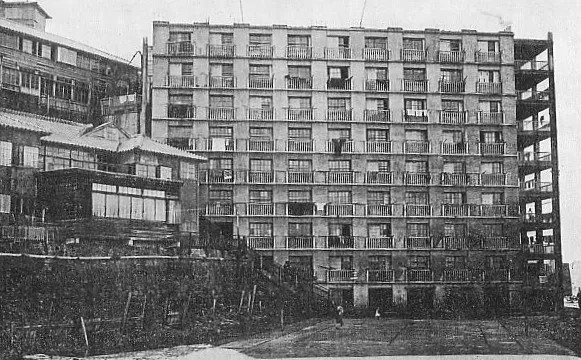
Photo: Unknown authorUnknown author, Public domain, via Wikimedia Commons
The pitch sounds almost generous. As rents soar and starter homes drift out of reach, a growing number of employers and venture-backed startups are offering what they call a solution: company-owned apartments, employer-tied rent subsidies, and 'live where you work' programs that promise to make housing affordable again. Hospitals are buying apartment buildings to house their nurses. Tech firms are subsidizing rents near the office. Manufacturing companies in tight rural labor markets are resurrecting a concept most Americans assumed died with the coal camps and mill villages of a century ago: employer-controlled housing.
We should call this what it is. Not a benefit. A lever.
The Oldest Playbook, Restored
The history here is not subtle. The Pullman company town of the 1880s — where George Pullman collected workers' wages and then collected their rent, and cut pay during a downturn without cutting rents — produced one of the defining labor uprisings in American history. The Norris-LaGuardia Act of 1932 and the Wagner Act of 1935 were, in part, written as a repudiation of employer domination over workers' lives outside the workplace. Congress understood something we are now being asked to forget: when your boss controls your roof, your 'free' consent to anything — a pay cut, a union vote, silence about abuse — is not consent at all.
Today's version arrives dressed in startup language. Rent is deducted from paychecks. Subsidies vanish if employment ends. Some programs require workers to live in designated properties as a condition of the job. The power imbalance is not incidental; it is the product.
Quiet-Firing With a Set of Keys
Consider what employment-tied housing does to the balance of power in a dispute. A worker in employer-owned housing who files a wage complaint, reports harassment, or signs a union card now faces the possibility of losing their job and their home in the same phone call. Labor organizers have long identified dual-dependency — company store, company housing, company doctor — as the single most effective tool for suppressing collective action. There is no reason to believe modern employers are more restrained than their Gilded Age predecessors, only that the coercion has been rebranded as convenience.
And the threat need never be spoken. The mere structure of the arrangement chills speech. A worker who knows her landlord is also her boss will calculate differently about everything — overtime disputes, safety complaints, whether to vote yes on April 12th.
The Policy Vacuum
Here is what should genuinely alarm policymakers: federal law barely touches this. The NLRA protects organizing activity, but enforcement is slow and remedies are weak. Fair housing law prohibits discrimination, not employer domination. There is no federal requirement that employer housing subsidies vest, that evictions from employer-owned units receive heightened process, or that workers displaced from job-tied housing receive any transition assistance whatsoever. A worker can lose her home for the simple offense of being laid off.
The strongest version of the counterargument deserves a hearing: in a genuine housing shortage, an employer offering below-market rent to a traveling nurse or a rural teacher is often the only reason that nurse takes the job or that teacher stays in the district. Rural hospitals cannot compete on salary. Refusing to let employers house workers does not conjure apartments into existence.
Fair enough — as far as it goes. But the answer to a housing shortage is housing policy, not employer paternalism. Public housing investment, zoning reform, non-profit and community land trusts, and tenant protections can deliver affordable homes without attaching a supervisor to the lease. Every dollar corporations spend acquiring rental stock to dangle over their workforce is a dollar of leverage they didn't have last year. We do not solve a power imbalance by deepening it.
Who Pays the Price
The workers most likely to encounter these arrangements are precisely those with the least bargaining power: immigrant workers on employer-linked visas, hospital staff in monopoly markets, meatpacking and food-processing workers in company-dominated rural towns, and young professionals priced out of coastal metros who will trade autonomy for a roof. These are also the workers least able to absorb a sudden eviction — the same populations already overrepresented in eviction filings and housing instability statistics.
What Progressives Should Demand
If employer housing is going to exist, it should exist on terms that sever the leash: mandatory lease terms that survive job loss for a defined period, eviction protections at least as strong as state law provides ordinary tenants, bright-line prohibitions on conditioning employment on tenancy, and aggressive NLRB scrutiny of any employer-housing arrangement in an active organizing campaign. Better yet, treat the phenomenon as what it is — a labor issue — and legislate accordingly.
The company town was not an accident of history that we outgrew; it was a power arrangement that workers and their unions fought to dismantle, generation by generation, over a century. It deserves to stay dismantled.
No worker in America should have to choose between their livelihood and their front door — and any policy that makes housing a condition of employment is not a benefit, it's a debt we should refuse to let employers collect.