Philanthropy's Shadow Government: How Billionaire Donor-Advised Funds Privatized Public Policy — Tax-Free

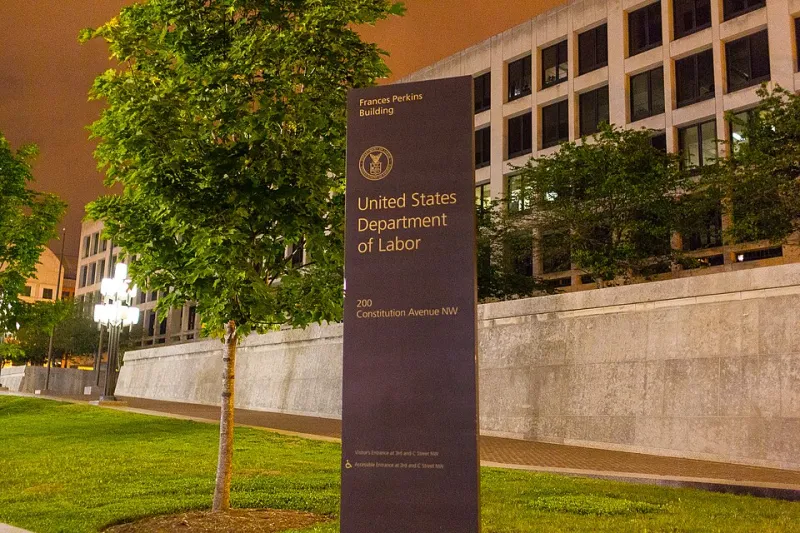
Photo: Xnatedawgx, CC BY-SA 4.0, via Wikimedia Commons
In 2023, donor-advised funds — financial vehicles that allow donors to claim an immediate tax deduction on contributions while distributing grants on their own timeline — held an estimated $230 billion in assets, according to the National Philanthropic Trust's annual report. That figure has roughly tripled over the past decade. Fidelity Charitable, the largest DAF sponsor in the country, now receives more in charitable contributions annually than the American Red Cross and United Way combined. And virtually none of it is subject to the transparency requirements, payout minimums, or public accountability standards that govern traditional private foundations.
This is not simply a story about wealthy people being generous. It is a story about how the American tax code has been quietly transformed into an instrument for concentrating philanthropic power in unaccountable private hands — and how that concentration is reshaping public policy in ways that voters never approved and cannot easily reverse.
The Mechanics of Influence
Here is how the system works. A billionaire — say, a tech entrepreneur sitting on $500 million in appreciated stock — transfers shares worth $50 million into a donor-advised fund. She receives an immediate charitable deduction of up to 60 percent of her adjusted gross income, which she can carry forward for up to five years. She pays no capital gains tax on the appreciated stock. The money sits in the DAF, invested and growing, and she retains advisory privileges over where it eventually flows — to which organizations, on what timeline, for what purposes.
There is no legal requirement that the money ever leave the DAF. Unlike private foundations, which are required to distribute at least five percent of their assets annually, DAFs face no mandatory payout schedule. The donor has received the full tax benefit. The public has received nothing — no guarantee of charitable activity, no timeline, no accountability.
When the money does move, it flows according to the donor's preferences, which may or may not align with public need. A donor who believes that school choice is the key to educational equity can funnel tens of millions into voucher advocacy organizations. A donor who opposes climate regulation can quietly fund think tanks that produce reports questioning the economic viability of clean energy transition. A donor who believes that reducing corporate tax rates is a social good can support policy research organizations that provide intellectual cover for that position — all of it tax-deductible, much of it anonymous.
The Anonymity Problem
DAFs have become a preferred vehicle for what researchers call "dark philanthropy" — charitable giving that influences public discourse and policy without disclosing the original donor's identity. Because DAFs can grant to other DAFs, and because grants are attributed to the sponsoring organization rather than the underlying donor, tracing the origin of philanthropic influence is often impossible.
Investigative reporting by outlets including ProPublica and The New York Times has documented how this opacity has been exploited. Conservative donor networks have used DAF structures to fund organizations working to restrict voting access, challenge public health measures, and roll back LGBTQ+ protections — all while maintaining a veneer of charitable neutrality. Progressive donors have used similar structures to fund advocacy on the left. But the scale and ideological direction of this spending is not symmetric: research by the Institute for Policy Studies has consistently found that DAF flows disproportionately benefit elite institutions and ideologically conservative causes, with relatively modest investment in organizations serving low-income communities.
The Tax Subsidy Nobody Voted For
The core equity problem is this: every dollar donated to a DAF is a dollar on which the donor pays no income tax. That tax benefit is effectively a public subsidy — money that would otherwise flow into the federal treasury and be allocated through the democratic appropriations process. Instead, it flows into private accounts controlled by individuals whose priorities may bear no relationship to public need.
The Urban-Brookings Tax Policy Center has estimated that the charitable deduction costs the federal government approximately $60 billion annually in foregone revenue. Because the deduction is worth more to taxpayers in higher brackets — a $1,000 deduction saves a 37-percent-bracket taxpayer $370, while saving a 22-percent-bracket taxpayer $220 — the subsidy is structurally regressive. The wealthiest donors receive the most generous effective subsidy for their philanthropic choices.
This means that when a billionaire decides to spend $100 million reshaping American education policy through a network of charter school advocacy organizations, the American public is effectively co-financing that agenda through foregone tax revenue — without any vote, any transparency requirement, or any mechanism for democratic correction if the agenda proves harmful.
The Strongest Defense — and Its Limits
Defenders of the DAF system make several arguments worth taking seriously. First, they contend that private philanthropy funds important work that government has consistently failed to prioritize — from AIDS research in the 1980s to bail reform advocacy today. Second, they argue that mandatory payout requirements or transparency rules would chill charitable giving and reduce the total flow of resources to civil society. Third, they suggest that the alternative — more government control over social spending — carries its own accountability risks.
These arguments have genuine merit. Private philanthropy has funded transformative work. The ACLU, the NAACP Legal Defense Fund, and countless local mutual aid organizations depend in part on charitable contributions, including from wealthy donors. A system that simply eliminated the charitable deduction could reduce the total resources available to civil society organizations without any guarantee that the recaptured revenue would flow to comparable purposes.
But acknowledging these points does not require accepting the current system as adequate. The choice is not binary — between the existing DAF regime and the elimination of all charitable incentives. The real question is whether tax-subsidized philanthropy should come with accountability conditions commensurate with the public subsidy involved. The answer, from any coherent democratic theory, is yes.
The Concentration of Social Power
Beyond the tax question lies a deeper concern about democratic legitimacy. When a small number of extraordinarily wealthy individuals control the financial infrastructure of civil society — funding the think tanks that produce policy ideas, the advocacy organizations that lobby for them, the media outlets that cover them, and the academic institutions that lend them credibility — the result is a feedback loop that insulates certain ideas from democratic challenge.
This is not a hypothetical threat. Research by scholars including Rob Reich at Stanford and Anand Giridharadas, author of "Winners Take All," has documented how elite philanthropy tends to fund solutions that do not challenge the structural conditions that produced the donor's wealth. The billionaire who made his fortune in an industry that suppressed wages, avoided taxes, and externalized environmental costs is unlikely to fund organizations that advocate for unionization, progressive taxation, or aggressive environmental regulation. He is more likely to fund workforce training programs, scholarship funds, and technology-based social enterprises — all of which address symptoms while leaving the underlying system intact.
The result is a philanthropic sector that is simultaneously enormously influential and structurally conservative — not in the narrow partisan sense, but in the deeper sense of preserving the arrangements from which its donors benefit.
What Reform Looks Like
A serious reform agenda would include several elements: mandatory minimum payout rates for DAFs, bringing them in line with the five-percent requirement for private foundations; enhanced disclosure requirements so that the public can trace the flow of tax-subsidized money through the philanthropic system; caps on the charitable deduction for very large gifts to prevent the most extreme concentration of philanthropic power; and enhanced IRS oversight of organizations that claim charitable status while engaging primarily in policy advocacy.
None of these reforms would eliminate private philanthropy. They would simply ensure that public subsidies come with public accountability — a principle that no serious democratic theory can reject.
A tax code that allows billionaires to redirect public revenue into private policy agendas, without disclosure, without accountability, and without democratic authorization, is not a system of charitable generosity — it is a system of legalized oligarchy, and the public deserves to understand exactly what they are subsidizing.