Democracy Runs on County Budgets: The Quiet Funding Crisis Behind Every Ballot You Cast
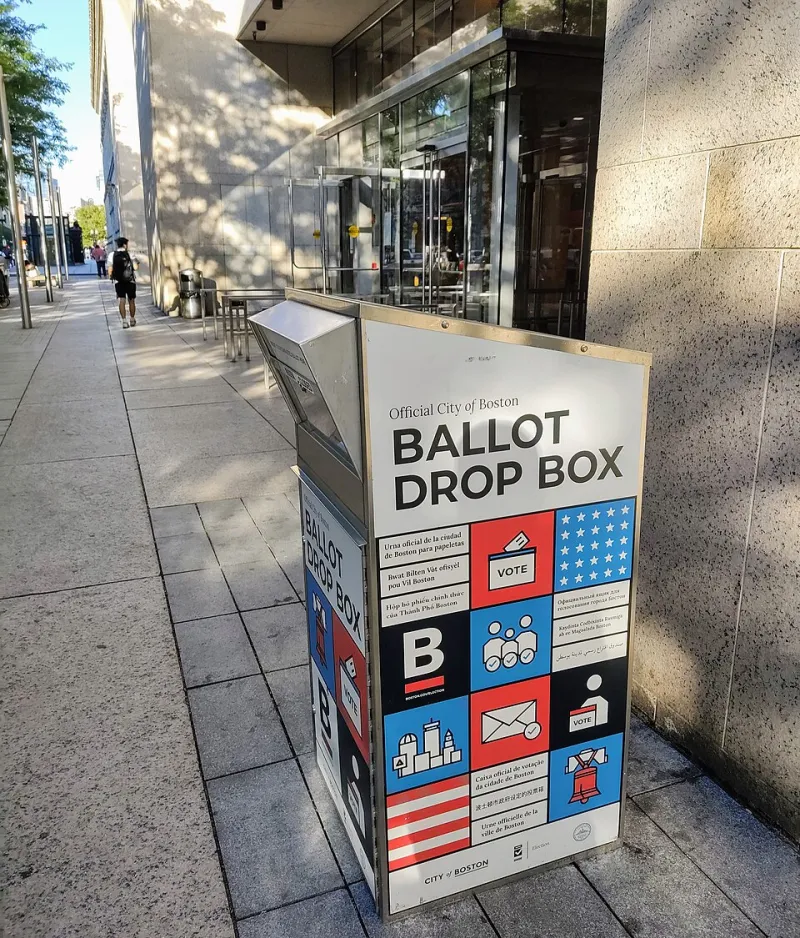
Photo: Whoisjohngalt, CC BY-SA 4.0, via Wikimedia Commons
Every presidential cycle, America asks its roughly 8,000-plus local election offices to run a high-stakes national event on a shoestring — and then acts surprised when the shoestring frays. Behind every record turnout figure is a county clerk working sixteen-hour days, a voting machine fleet purchased during the second Bush administration, and a poll worker roster held together by retirees and hope. This is not a hypothetical crisis. It is the operating condition of American democracy, and it is getting worse.
The Arithmetic of Neglect
The structure of American election administration is deliberately decentralized: states and counties shoulder the overwhelming share of election costs, from equipment to polling places to poll worker stipends. That means a wealthy suburban county can upgrade its machines while a rural neighbor two hundred miles away cannot — a de facto lottery of democracy determined by property tax bases.
The federal government has intervened only sporadically. The Help America Vote Act of 2002 delivered a one-time infusion of roughly $3.9 billion to modernize after the 2000 Florida recount disaster. The 2020 pandemic-era CARES Act and subsequent appropriations added emergency funds. But between those moments, local election budgets are whatever county commissions decide they are — and county commissions, facing pressure on schools, jails, and roads, routinely treat elections as a line item to trim.
The consequences are well documented by election officials themselves. Surveys by the National Association of Election Officials and research from the Brennan Center for Justice have repeatedly found that large shares of local election offices report insufficient budgets to replace aging equipment before it fails, and that many jurisdictions struggle to recruit enough poll workers — a problem that intensified after 2020, when harassment and conspiracy-driven threats drove experienced administrators out of the profession. Turnover among election officials has spiked, taking institutional knowledge with it.
Why This Is a Progressive Fight — and a Universal One
There is a temptation to treat election funding as a narrow good-government issue. It is broader than that. Underfunded election systems fail unevenly. Long lines fall hardest on hourly workers who cannot take unpaid time off, on voters with disabilities, on parents without childcare, and on Black and Latino neighborhoods where polling place consolidation has historically concentrated demand. A democracy that rations convenience by income is not neutral — it is a subsidy to the voters who already have the most leisure time.
Progressives should also be honest about a harder truth: election underfunding is not a partisan weapon in the way vote suppression statutes are. County officials of both parties preside over strained budgets, and election administrators of both parties are burning out. That is precisely why this fight is winnable. Funding elections is one of the few voting issues that can command broad consensus — because every voter, in every party, needs the machines to work and the lines to move.
The Strongest Counterargument — and Why It Fails
The most serious objection comes from fiscal conservatives who argue that election administration is a quintessentially local responsibility, and that federal money invites federal strings. There is a real principle there: the Tenth Amendment tradition of local control has value, and one-size-fits-all mandates can be clumsy.
But local control was never meant to mean local beggary. Federal highway funding flows to states with conditions attached, and nobody argues the interstate system is a federal coup. A standing, formula-based federal election fund — distributed to states and passed through to counties, with protections for local administration autonomy — would stabilize the system without nationalizing it. The alternative is what we have now: critical democratic infrastructure surviving on grant cycles, emergency appropriations, and luck.
Who Pays the Price
When an election office is starved, the costs land on identifiable people. The voter in a growing exurb who waits three hours because the county couldn't buy enough machines. The disabled voter whose precinct's accessible equipment sits unrepaired. The 74-year-old poll worker covering a shift no one else would take. And the election official — increasingly a target of threats — who leaves a modest public salary for the private sector because no budget, no staffing plan, and no security funding made the job survivable.
What Should Happen Next
The policy ask is straightforward: permanent, predictable federal funding for election administration, distributed by formula, paired with state matching requirements so the burden is genuinely shared. Advocacy organizations from the Brennan Center to the election officials' own professional associations have laid out versions of this. What has been missing is political will — because a crisis that unfolds quietly, county by county, generates no viral footage.
The 2024 cycle's record turnout should be read as a warning, not a comfort: demand on the system is rising while capacity erodes. Democracy does not fail all at once. It fails one unreplaced machine, one unfilled poll worker shift, one resigned clerk at a time.
The verdict is simple: a nation that can find billions for everything else has no excuse for running its elections on spare change — fund the infrastructure of the vote, or watch it degrade in front of you.
Note: This is editorial commentary grounded in widely reported, well-documented trends in election administration funding. Readers should consult current budget figures from their own county and state election offices, as specific allocations vary by jurisdiction and fiscal year.