The 'Merit' Myth: How Legacy Admissions at Elite Universities Rig the Game for the Wealthy While Blaming Affirmative Action
The Supreme Court's decision to end race-conscious admissions at Harvard and the University of North Carolina was sold as a victory for merit-based selection. Chief Justice John Roberts wrote that universities must treat applicants "based on his or her experiences as an individual—not on the basis of race." Yet as students across America receive their college acceptance letters this spring, one of higher education's most entrenched forms of preferential treatment remains untouched: legacy admissions.
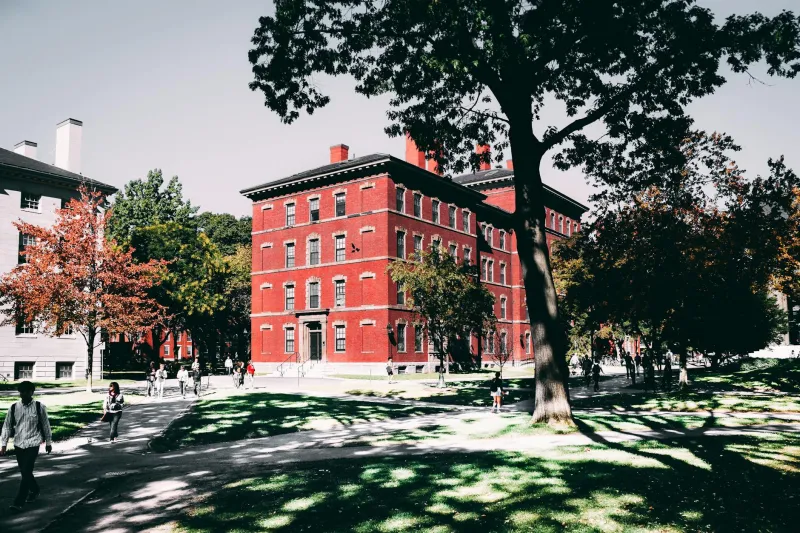
 Photo: Princeton University, via blogger.googleusercontent.com
 Photo: Yale University, via ausmalbilderkinder.de
The Numbers Don't Lie: Legacy Preference Is Affirmative Action for the Rich
At Harvard, students with alumni parents are admitted at rates of 33.6%—nearly six times higher than the overall acceptance rate of 5.9%, according to data from Students for Fair Admissions v. Harvard. At Yale, legacy applicants enjoy a 30% admission rate compared to 6.9% for all applicants. Princeton admits legacy students at 29.9% versus 5.8% overall.
These aren't marginal advantages—they're systematic preferences that dwarf any boost historically provided by race-conscious admissions. A 2019 study by economist Raj Chetty found that students from families in the top 1% of income distribution are 77 times more likely to attend an Ivy League college than those from families in the bottom income quintile. Legacy admissions are a key mechanism driving this inequality.
Yet while affirmative action faced decades of legal challenges and political attacks, legacy preferences operate in comfortable shadows. No congressional hearings examine their impact on merit. No Supreme Court cases question their constitutionality. The same conservative legal movement that spent millions dismantling programs designed to increase racial diversity has shown zero interest in challenging a system that overwhelmingly benefits wealthy white families.
Follow the Money: How Donations Shape Admissions
Legacy admissions aren't just about family tradition—they're about maintaining revenue streams. Harvard's own data shows that legacy students' families donate at significantly higher rates than non-legacy families. The university's development office maintains detailed records of donor capacity, and admissions officers regularly consult these "dean's interest lists" when making decisions.
A 2020 investigation by the Harvard Crimson found that 70% of legacy admits had relatives who donated to the university. Among students whose families gave more than $1 million, the admission rate jumped to 42%. This isn't coincidence—it's a carefully calibrated system that transforms educational opportunity into a commodity for the highest bidder.
Critics argue that donations fund scholarships and facilities that benefit all students. But this misses the fundamental question of fairness. Public universities like UNC receive taxpayer funding, while private institutions like Harvard benefit from billions in federal research grants and tax-exempt status. When these publicly subsidized institutions reserve spots for the wealthy, they're using public resources to perpetuate private advantage.
The Racial Dimension: Protecting White Privilege While Attacking Diversity
Legacy admissions aren't racially neutral. Because elite universities excluded Black, Latino, and Asian students for most of their history, their alumni networks remain overwhelmingly white. A 2004 study found that eliminating legacy preferences would increase admission rates for Black and Latino students while slightly decreasing rates for white students.
The Students for Fair Admissions lawsuit that ended affirmative action was ostensibly filed on behalf of Asian American students. Yet the same organization has shown no interest in challenging legacy admissions, despite clear evidence that these preferences disadvantage Asian American applicants in favor of white legacies. This selective outrage reveals the true agenda: not promoting fairness, but protecting existing hierarchies.
The impact extends beyond individual admissions decisions. Elite universities serve as gatekeepers to positions of power in law, medicine, business, and government. When these institutions systematically favor the already-privileged, they reproduce inequality across generations. The Supreme Court justices who voted to end affirmative action—Roberts, Thomas, Alito, Gorsuch, Kavanaugh, and Barrett—attended Harvard, Yale, or Notre Dame. Several benefited from connections and advantages unavailable to first-generation college students.
The International Perspective: America as an Outlier
Legacy preferences are largely an American phenomenon. Oxford and Cambridge, despite their elite status, admit students based on academic performance and potential, not family connections. German and French universities operate on merit-based systems. Even among elite institutions globally, American universities stand out for their willingness to sell admission to the highest bidder.
This international comparison exposes the hollowness of "merit" arguments. If Harvard truly sought the most qualified students, it would follow the model of institutions like Caltech, which eliminated legacy preferences in the 1990s without suffering academic decline. Instead, Harvard maintains a dual system: merit-based selection for most applicants, with a separate track for the wealthy and connected.
The Path Forward: Real Reform Requires Real Pressure
Several states have moved to address this inequality. Colorado banned legacy preferences at public universities in 2021. California prohibits the practice at UC schools. Maryland and Virginia are considering similar legislation. But meaningful change requires federal action.
Congress should condition federal funding on eliminating legacy preferences. The Department of Education should investigate whether these practices violate civil rights laws. Most importantly, the same legal organizations that spent decades challenging affirmative action should apply their "merit-based" principles consistently—or admit their real agenda was never about fairness.
The Supreme Court claimed to promote equality by ending race-conscious admissions, but true equality requires dismantling all forms of unearned advantage, not just those that benefit historically marginalized groups. Until elite universities abandon their affirmative action program for the wealthy, their claims about merit will remain what they've always been: a convenient fiction to justify inherited privilege.