The Climate Insurance Cliff: How Working Families Are Being Forced to Self-Insure Against Billion-Dollar Disasters
When the Safety Net Becomes a Trap
Jamie Rodriguez thought she had made it. After fifteen years working double shifts as a certified nursing assistant in Fort Myers, Florida, she had saved enough for a down payment on a modest three-bedroom house in a working-class neighborhood inland from the coast. The 2019 purchase represented everything she had worked toward: stability for her two teenagers, equity building toward retirement, and escape from the rent increases that had been devouring her paycheck.
 Photo: Fort Myers, Florida, via onlineshop.kludi.com
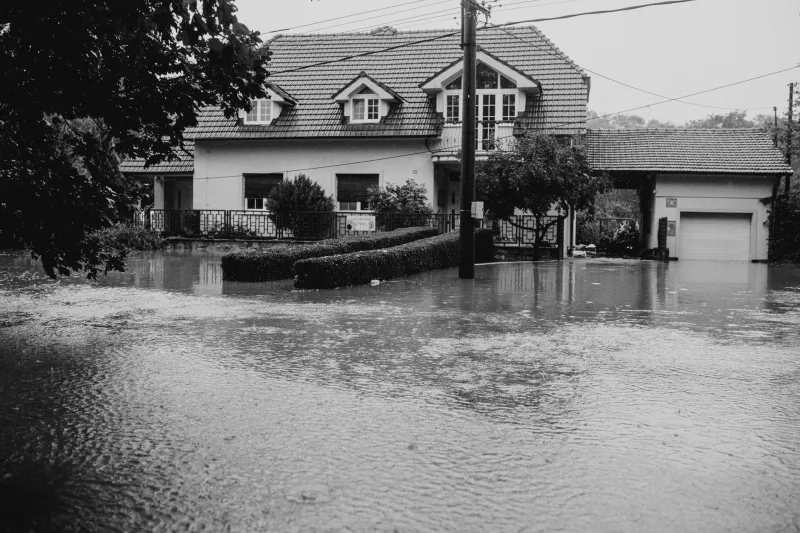
Then Hurricane Ian arrived in 2022, and Rodriguez discovered what millions of working-class homeowners across America are learning the hard way: when climate disaster strikes, the insurance industry's promise of protection evaporates faster than storm surge recedes. Her carrier, one of dozens that have fled Florida in recent years, had already stopped writing new policies. Her coverage was dropped six months before the storm hit.
 Photo: Hurricane Ian, via cdnb.artstation.com
Rodriguez now pays $8,400 annually — nearly 30% of her gross income — for bare-bones coverage through Citizens Property Insurance, Florida's state-run "insurer of last resort." The alternative is going without insurance entirely, which would mean losing her mortgage and her home. She represents the front edge of a crisis that is quietly remaking American homeownership: the climate insurance cliff that is pushing working families toward financial ruin.
The Great Insurance Retreat
The numbers tell a story of systematic abandonment. In California, State Farm stopped writing new homeowner policies in May 2022, citing wildfire risk. Allstate followed suit, then expanded its moratorium statewide. In Florida, more than 400,000 policies have been dropped since 2022, with major carriers including Farmers and AAA pulling out of entire regions. Louisiana has lost 30% of its insurance market since Hurricane Ida in 2021.
This isn't random market volatility — it's a calculated retreat by an industry that has decided climate risk is no longer profitable to bear. The Insurance Information Institute reports that insurers paid out $99 billion in catastrophic losses in 2022 alone, with climate-related disasters accounting for the vast majority. Rather than raise premiums to cover these costs across their entire customer base, major carriers are simply abandoning the markets where climate risk is highest.
The result is a brutal form of economic triage. Wealthy homeowners can self-insure, absorb losses, or relocate to lower-risk areas. Working-class families like Rodriguez get stuck with whatever coverage they can find at whatever price insurers demand — or they go without protection entirely.
The State Insurance Trap
When private insurers flee, homeowners are funneled into state-run programs that were designed as temporary backstops but have become permanent dumping grounds for climate risk. These "insurers of last resort" — Citizens in Florida, the FAIR Plan in California, Louisiana Citizens — now cover millions of properties that private companies won't touch.
The problem is that these state programs were never designed to handle the scale of risk they now face. Florida's Citizens Property Insurance, which covered just 400,000 policies in 2020, now insures over 1.3 million properties — making it the largest property insurer in the state by default. The program's rates have increased 63% since 2021, and further increases are automatic whenever private insurers raise their rates.
These state programs also provide dramatically less coverage than private insurance. California's FAIR Plan covers only fire damage, not the comprehensive protection most homeowners need. Louisiana Citizens caps coverage well below the replacement cost of most homes. When disaster strikes, families discover they're underinsured for everything from temporary housing to debris removal.
Worse yet, these programs are fundamentally unstable. When a major disaster hits, state insurers can assess all policyholders — including those with private coverage — to cover shortfalls. This means that even homeowners who pay for private insurance can be hit with additional bills to subsidize the state program they were trying to avoid.
The Wealth Stratification Accelerator
The insurance crisis isn't just about climate risk — it's about how that risk gets distributed across class lines. The pattern is becoming clear: wealthy homeowners in high-risk areas can afford to self-insure or relocate, while working-class families get trapped in a system designed to extract maximum premiums for minimal protection.
This dynamic is most visible in California's wildfire zones, where tech executives in Marin County can absorb a $2 million loss on a second home while teachers and firefighters in the same area face financial ruin from a single fire. The wildfire risk is identical, but the economic consequences are radically different.
 Photo: Marin County, via coindoo.com
The geographic concentration of climate risk compounds these inequalities. Working-class communities are more likely to be located in flood zones, wildfire interfaces, and hurricane corridors — areas that were historically cheaper precisely because of environmental hazards that are now becoming uninsurable. As insurance costs spike, these communities face a double bind: they can't afford to stay, but they also can't afford to leave.
Federal disaster aid, supposedly the backstop for uninsured losses, systematically favors wealthy homeowners. FEMA's Individual Assistance program caps payouts at $37,000 — barely enough to repair a damaged roof, let alone rebuild a destroyed home. Meanwhile, the National Flood Insurance Program, which covers many working-class properties, has been $20 billion in debt since Hurricane Katrina and regularly runs out of funds.
The Regulatory Failure
State insurance commissioners, who regulate the industry, have largely enabled this crisis through decades of deference to insurer demands. Rather than requiring companies to spread climate risk across their entire customer base — the fundamental principle of insurance — regulators have allowed carriers to cherry-pick low-risk markets while dumping high-risk properties onto state programs.
This represents a fundamental abandonment of insurance regulation's core purpose: ensuring that essential coverage remains available and affordable. Instead of forcing insurers to price climate risk into their entire business model, regulators have allowed them to socialize losses while privatizing profits.
The political dynamics make reform difficult. Insurance companies are major political donors and employers in many states. They argue that restricting their ability to abandon high-risk markets will force them to raise rates for everyone — a threat that regulators take seriously. The result is a race to the bottom where states compete to offer insurers the most favorable regulatory environment.
Meanwhile, the federal government has largely stayed on the sidelines despite climate change being a national crisis requiring national solutions. There is no federal insurance program for climate disasters beyond the limited National Flood Insurance Program. No federal standards for insurance availability or affordability. No coordination between states as the crisis spreads.
The Coming Reckoning
The insurance crisis is still in its early stages, but the trajectory is clear. As climate disasters intensify and spread to new regions, more insurers will abandon more markets, forcing more families into inadequate state programs or leaving them uninsured entirely.
The economic consequences will ripple far beyond individual homeowners. When working-class families can't get insurance, they can't get mortgages. When they can't get mortgages, they can't build equity or access credit. When entire communities become uninsurable, property values collapse, taking local tax bases with them.
This process is already visible in parts of Florida and California, where some neighborhoods are experiencing a "managed retreat" not through planned government policy but through market abandonment. Schools close when families leave. Local businesses fail when customers disappear. The infrastructure of working-class communities simply dissolves.
Beyond Market Solutions
The insurance industry's response to climate change reveals the fundamental limitation of market-based approaches to existential threats. When the costs become too high, private companies simply walk away, leaving communities to fend for themselves.
A truly progressive response would recognize that climate protection, like healthcare and education, is a public good that requires public provision. This might mean a national climate insurance program that spreads risk across the entire population rather than concentrating it in vulnerable communities. It might mean public ownership of insurance companies that prioritize coverage over profits. It certainly means federal coordination and funding rather than leaving states to compete for insurer favor.
Most fundamentally, it means recognizing that the insurance crisis is a symptom of a larger failure: the refusal to treat climate change as the national emergency it has become. Until we address the root causes of climate risk through rapid decarbonization and massive adaptation investments, working families will continue to bear the costs of a crisis they did not create.
The climate insurance cliff isn't just about insurance — it's about whether America will protect its most vulnerable citizens from the consequences of climate change, or abandon them to face the storm alone.