The Hospice Industrial Complex: How Private Equity Bought End-of-Life Care — And Turned Dying Into a Profit Center
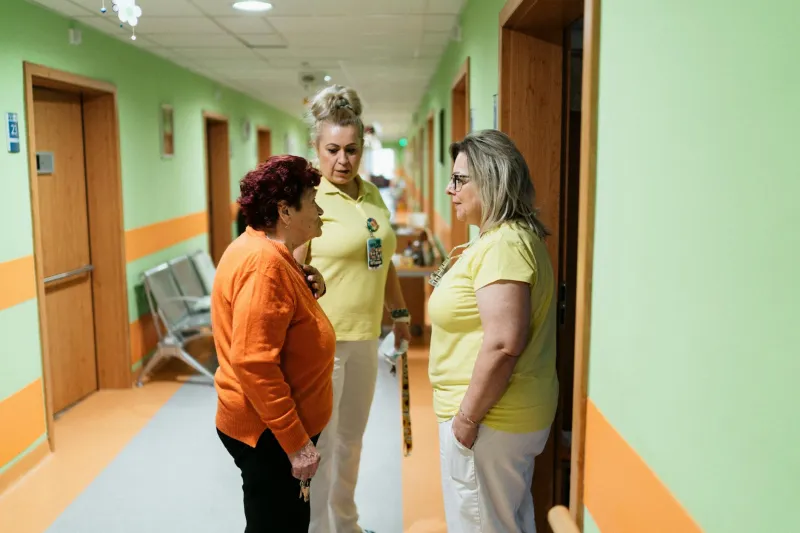
When Maria Santos entered hospice care last fall after a lung cancer diagnosis, her family expected compassionate end-of-life support. Instead, they encountered a system transformed by financial engineering. Her hospice provider, recently acquired by a private equity firm, assigned her a nurse who managed 40 patients across three counties. Social worker visits, once weekly, were cut to monthly. The promise of 24/7 support became a call center in another state where staff read from scripts rather than medical charts.
Maria's experience reflects a quiet transformation of American hospice care. Over the past decade, private equity firms have acquired hundreds of hospice and palliative care providers, applying the same profit-maximizing strategies that have hollowed out nursing homes, emergency rooms, and medical practices. The result is a system that extracts maximum revenue from Medicare while providing minimum care to families facing their most vulnerable moments.
The Buyout Bonanza: Wall Street Discovers Death
Private equity investment in hospice care has exploded from virtually zero in 2010 to over $2 billion in acquisitions since 2015, according to industry tracking firm PitchBook. Firms like Harvest Partners, GTCR, and Warburg Pincus have purchased regional hospice chains, consolidated them into national networks, and applied standard private equity playbooks: cut labor costs, increase patient volume, and optimize billing.
The appeal is obvious. Hospice care offers predictable revenue streams through Medicare reimbursements, limited regulatory oversight, and patients who typically can't complain about service quality. Medicare pays hospices a daily rate averaging $195 per patient, creating incentives to keep patients enrolled as long as possible while minimizing actual services provided.
Kindred at Home, one of the nation's largest hospice providers, was acquired by TPG Capital and Welsh, Carson, Rowe & Lowber in 2018 for $2.8 billion. Gentiva Health Services, another major player, was purchased by Humana after previous private equity ownership. These deals have created hospice empires managing thousands of patients across multiple states, often with minimal local oversight.
Staffing Cuts and Service Reductions: The Human Cost of Financial Engineering
Former hospice workers describe systematic changes following private equity acquisitions. Nurse-to-patient ratios that once averaged 12-15 patients per nurse have expanded to 25-35 patients. Social workers and chaplains, once considered essential team members, are often eliminated or reduced to part-time contractors. On-call nursing, previously provided by dedicated hospice staff, is outsourced to generic medical services that lack specialized training.
"After the buyout, everything changed," says Jennifer Walsh, a registered nurse who worked for a Pennsylvania hospice acquired by a private equity-backed chain. "We went from spending 45 minutes to an hour with each patient to rushing through 15-minute visits. Families would call desperate for help, but we were told to handle everything by phone unless it was a true emergency."
Centers for Medicare & Medicaid Services data shows troubling patterns at private equity-owned hospices. Average length of stay has increased 23% since 2015, suggesting patients are being enrolled earlier and kept longer to maximize reimbursements. Meanwhile, the percentage of patients receiving social worker visits declined 18% over the same period, and chaplain services dropped 31%.
Medicare Fraud and Regulatory Failures
The transformation of hospice care has coincided with explosive growth in Medicare fraud investigations. The Department of Health and Human Services Office of Inspector General has identified hospice care as a "high-risk" area for improper payments, estimating that Medicare loses $2.3 billion annually to hospice fraud and abuse.
Common schemes include enrolling patients who aren't terminally ill, providing unnecessary services to inflate bills, and keeping patients on service long after they've stabilized. A 2019 investigation by the Miami Herald found that some private equity-backed hospices in Florida had average lengths of stay exceeding 200 days—far above the 90-day median for legitimate hospice care.
Yet enforcement remains sporadic. CMS conducted just 127 hospice surveys nationwide in 2022, compared to over 1,200 surveys annually in the early 2010s. Budget cuts and regulatory capture have left an industry handling 1.7 million patients annually with minimal oversight. When violations are found, penalties are often minimal—a few thousand dollars in fines for companies generating millions in revenue.
The International Contrast: How Other Nations Handle End-of-Life Care
Other developed nations treat end-of-life care as a public health responsibility, not a profit opportunity. The United Kingdom's NHS provides hospice services through a combination of public funding and regulated charities. Canada integrates palliative care into its universal health system. Germany and France fund hospice care through social insurance programs that prioritize patient outcomes over profit margins.
 Photo: United Kingdom, via m.media-amazon.com
These systems consistently outperform the United States on quality metrics. A 2021 Economist Intelligence Unit study ranking end-of-life care across 81 countries placed the UK first, Canada ninth, and the United States 43rd. American hospice care ranked particularly poorly on affordability and quality of care—precisely the areas where private equity optimization has focused.
Family Stories: The Reality Behind the Revenue
The human impact of financialized hospice care extends far beyond statistics. Families describe being pressured to enroll loved ones in hospice prematurely, then abandoned when actual care is needed. Emergency visits that once brought skilled nurses now result in undertrained aides with no authority to adjust medications or provide medical interventions.
Robert Chen's father entered a private equity-owned hospice in California after a stroke. "They promised 24/7 support, but when Dad developed breathing problems at 2 AM, the on-call service told us to give him Tylenol and call back if he got worse," Chen recalls. "We ended up taking him to the emergency room ourselves. The hospice billed Medicare for a 'crisis visit' that never happened."
These stories reflect systematic incentive misalignment. Private equity firms profit by minimizing care while maximizing billing, creating direct conflicts with patient welfare. Families facing end-of-life decisions lack the expertise to evaluate hospice quality, making them vulnerable to marketing promises that bear little relation to actual service delivery.
The Policy Solution: Treating Death With Dignity
Meaningful hospice reform requires recognizing end-of-life care as a public good, not a commodity. Medicare should cap hospice lengths of stay to prevent gaming, increase reimbursement rates for hands-on care while reducing administrative payments, and require minimum staffing ratios for nurses, social workers, and chaplains.
Congress should also consider ownership restrictions similar to those governing nursing homes in some states. Rhode Island prohibits private equity ownership of nursing facilities, recognizing that profit maximization conflicts with patient care. Similar protections for hospice care would prevent the worst abuses while preserving legitimate providers.
Most fundamentally, America must decide whether dying with dignity is a human right or a luxury good. Private equity's colonization of hospice care represents the logical endpoint of healthcare financialization—extracting profit from society's most vulnerable moments while socializing the costs through Medicare. How we treat the dying reflects our values as a society, and right now, those values are being written by Wall Street accountants rather than medical professionals or grieving families.