The Immigration Court Backlog Is Not an Accident — It's a Policy Choice to Keep Migrants in Limbo Forever
The Manufactured Crisis
Maria Gonzalez fled Honduras in 2019 after gang members threatened to kill her teenage son. Three and a half years later, she's still waiting for her asylum hearing in Chicago, unable to work legally, separated from family members, and living in constant fear of deportation. Her case is one of more than 3.1 million pending in America's immigration courts—a backlog that has tripled in the past decade and now averages over four years per case.
This isn't bureaucratic incompetence. It's a deliberate policy choice designed to weaponize due process itself, turning the constitutional right to a hearing into a form of prolonged punishment that breaks spirits, separates families, and serves the political interests of those who benefit from immigration as a perpetual crisis rather than a solvable challenge.
Starving Justice by Design
The United States currently operates 68 immigration courts with approximately 600 judges to handle over three million cases. By comparison, the federal district court system—handling far fewer cases—employs over 670 judges. The math is intentionally impossible. Each immigration judge carries an average caseload of over 5,000 cases, compared to roughly 400 cases per federal district judge.
This resource starvation isn't accidental. Immigration courts fall under the Department of Justice, not the independent federal judiciary, making them vulnerable to political manipulation. The Trump administration imposed case completion quotas on immigration judges, requiring them to close 700 cases per year or face performance reviews. The Biden administration eliminated the quotas but failed to meaningfully address the underlying resource crisis.
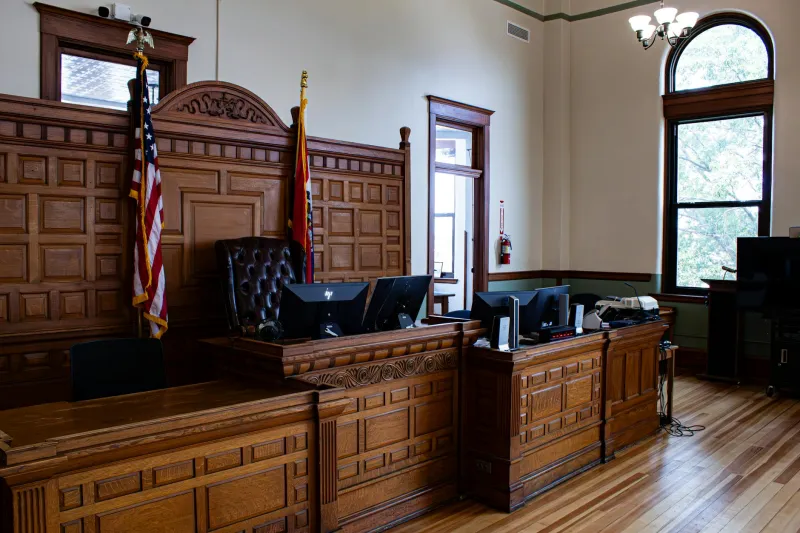
 Photo: Department of Justice, via www.pngitem.com
Congress appropriated just $1.6 billion for immigration courts in fiscal year 2023—less than the cost of a single Navy destroyer. The Executive Office for Immigration Review has requested funding for 100 additional judges annually for years, only to receive authorization for a fraction of that number. Meanwhile, Immigration and Customs Enforcement receives over $8 billion annually to apprehend and detain immigrants, creating a system designed to capture people faster than courts can process their cases.
The Cruelty Is the Point
The backlog doesn't just delay justice—it denies it entirely. Asylum seekers face a Kafkaesque nightmare where the right to counsel exists in theory but not practice. Unlike criminal defendants, immigrants in removal proceedings have no right to appointed counsel, and many face deportation hearings without legal representation. Those who can afford attorneys often wait years for their day in court, watching their cases grow stale as evidence disappears and witnesses scatter.
Children bear the heaviest burden. Unaccompanied minors comprise nearly 40% of the immigration court backlog, with some cases dating back over a decade. These children age out of special protections while waiting, turning eighteen in legal limbo without the chance to present their cases. Many give up hope entirely, accepting deportation to countries they barely remember rather than enduring indefinite uncertainty.
The psychological toll is devastating. Studies show that prolonged immigration proceedings cause rates of depression, anxiety, and PTSD comparable to torture survivors. Families live in constant fear of separation, unable to plan for the future or fully integrate into their communities. The uncertainty becomes its own form of punishment, achieving through bureaucratic cruelty what explicit detention cannot.
Political Theater Masquerading as Policy
Both major political parties have weaponized the immigration court backlog for electoral advantage, but neither has shown genuine interest in solving it. Republicans point to the backlog as evidence that the system is "broken" while simultaneously blocking funding for additional judges and staff. Democrats promise comprehensive reform while failing to prioritize the basic infrastructure needed to provide due process.
The result is a system that satisfies no one except those who profit from perpetual crisis. Immigration attorneys build practices around indefinite delays. Detention contractors benefit from prolonged stays. Politicians use the chaos to justify increasingly harsh enforcement measures. The only losers are the immigrants trapped in the system and the American communities that could benefit from their contributions if they were allowed to work legally while awaiting resolution.
Meanwhile, the broader immigration enforcement apparatus operates with brutal efficiency when it serves political purposes. ICE can mobilize resources for workplace raids and family separations, but Congress claims poverty when asked to fund enough judges to provide constitutional due process. The selective dysfunction reveals the true priorities of a system designed to punish, not adjudicate.
The Solutions Are Obvious—If We Want Them
Fixing the immigration court backlog isn't rocket science. It requires political will and adequate funding. Congress could immediately authorize 1,000 additional immigration judges and support staff, reducing average wait times to under six months within two years. The total cost—roughly $500 million annually—represents less than 6% of ICE's current budget.
Structural reforms could further streamline the process. Moving immigration courts out of the Justice Department and into the independent federal judiciary would insulate judges from political pressure. Expanding legal aid funding would ensure meaningful representation for asylum seekers. Technology upgrades could eliminate the paper-based filing systems that contribute to delays.
Some cases need not reach court at all. Administrative processes could resolve straightforward family reunification and employment-based cases, reserving judicial resources for complex asylum and removal proceedings. Comprehensive immigration reform could provide pathways to legal status for long-term residents, clearing millions of cases from the backlog overnight.
Breaking the Cycle of Manufactured Crisis
The immigration court backlog serves powerful interests precisely because it appears to be dysfunction rather than design. Voters see chaos and blame immigrants rather than the politicians who created the impossible system. Advocates focus on individual cases rather than systemic reform. The media treats each new delay milestone as news rather than recognizing the pattern of deliberate sabotage.
Breaking this cycle requires naming the truth: America's immigration court crisis is not an accident of bureaucracy but a tool of policy, designed to inflict maximum suffering while maintaining plausible deniability. Until we acknowledge that the cruelty is intentional, we cannot build the political coalition necessary to demand justice.
Maria Gonzalez and millions like her deserve better than a system designed to break their spirits while enriching those who profit from their suffering. They deserve what the Constitution promises every person within America's borders: due process of law, delivered with the urgency that human dignity demands. The only question is whether we have the moral clarity and political courage to provide it.